This article is for wellness and informational purposes only. It is not a medical treatment and does not replace professional advice. Always talk to your doctor before starting any new health routine, especially if you are managing a condition like dementia or Alzheimer’s disease, or if you take blood thinners or diabetes medication.
Katie is my early-warning system for every viral food trend on the internet.
She’ll walk into the kitchen, phone in hand, and say something like “Dad, have you heard about the Asian honey protocol?” And I’ll say no, because I’m a 40-something guy in Texas whose wellness routine is mostly black coffee and hoping for the best.
But she kept bringing it up. And then my mom mentioned that her neighbor had started doing something with honey and turmeric every morning for her memory. And then I actually sat down and looked into it.
What I found surprised me. Not because it was some miracle cure it isn’t, and I’ll be upfront about that. But because underneath all the TikTok noise and vague wellness claims, there’s a real recipe with real ingredients and a genuinely interesting body of research behind it. This is a traditional blend from Southeast Asia that people have been using for generations, and modern science is starting to catch up with why it works.
So here it is: the Asian honey protocol recipe, explained properly. No hype. Just the five ingredients, the reasoning, and what the research actually says.
Why You’ll Love This Recipe
- Five ingredients you probably already have. Raw honey, turmeric, cinnamon, lemon, and black pepper. That’s the whole list.
- Make a two-week batch in eight minutes. One prep session, two weeks of daily doses done.
- The black pepper is not optional and once you understand why, you’ll never skip it again. It makes the turmeric actually work in your body.
- Backed by real research from PubMed and peer-reviewed sources not just TikTok testimonials.
- Works as a straight spoonful or stirred into warm water. Flexible enough to actually stick with.
What Is the Asian Honey Protocol, Really?
The name sounds like something from a clinical study. It’s not. The Asian honey protocol is a daily morning ritual rooted in Southeast Asian traditional medicine, particularly from Malaysia, Indonesia, and Thailand, where honey has been used for centuries not just as a sweetener but as a functional food for brain health and overall wellness.
The term “protocol” popped up online as people started documenting the practice more systematically often after looking into memory support for aging parents, or for themselves. It spread through search trends like honey trick recipe, honey for memory, and the honey trick recipe discussions that have been circulating for a while now.
Here’s what I want to be clear about: no single food cures Alzheimer’s disease or reverses dementia. Anyone telling you otherwise is misleading you. What this blend does offer is a combination of ingredients with well-documented antioxidant, anti-inflammatory, and neuroprotective properties that may support brain health over time when used consistently, as part of a real-food lifestyle.
Think of it less as medicine and more as a smart morning habit. The kind that takes two minutes and gives your body something useful to work with every day.
Asian Honey Protocol Ingredients: What Goes In and Why
Every ingredient in this blend has a specific job. Nothing is decorative. Here’s what you need and why each one matters.
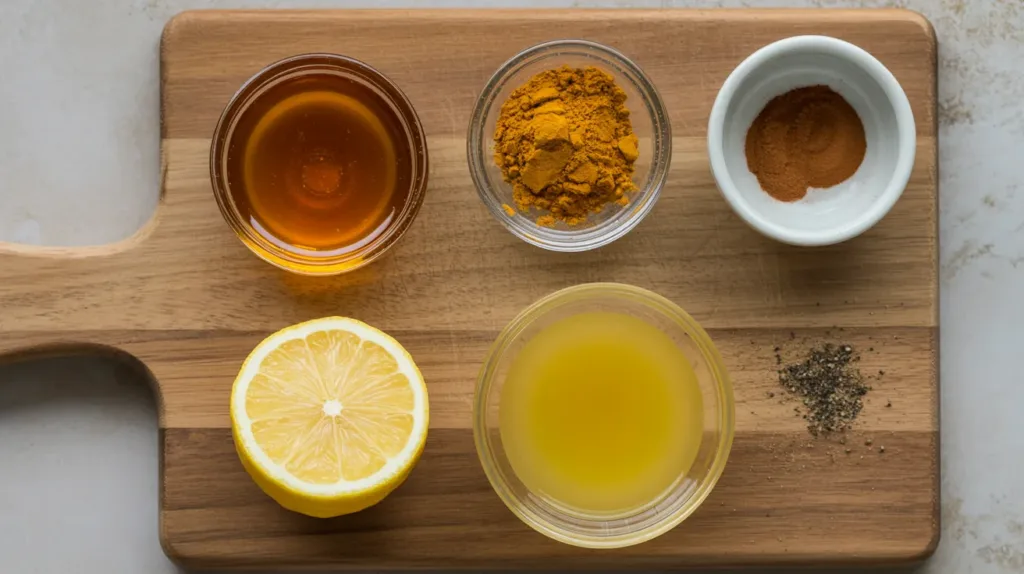
The Five Ingredients
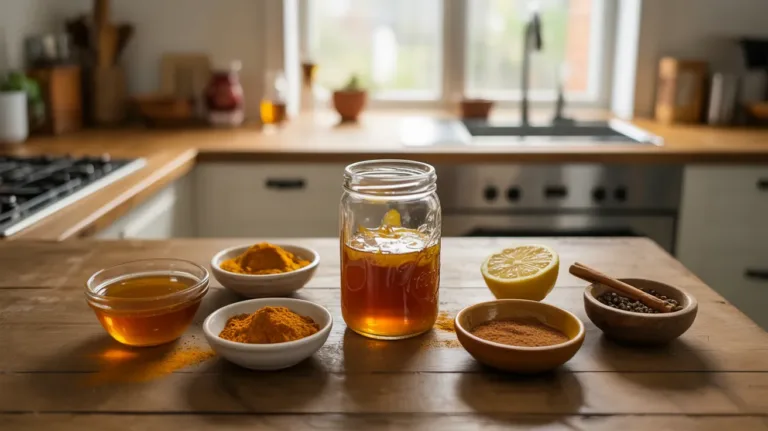
- Raw honey (tualang or manuka preferred, raw local honey works too): 4 tablespoons for a two-week batch
- Ground turmeric: 2 teaspoons
- Ground Ceylon cinnamon: 1 teaspoon
- Fresh lemon juice: 2 tablespoons
- Freshly ground black pepper: 1/8 teaspoon
That’s it. Odds are four of those five are in your pantry right now.
Why Raw Honey Is the Foundation
Raw honey is not just a sweetener. It’s loaded with polyphenols, flavonoids, and antioxidants that actively reduce oxidative stress. Think of oxidative stress the way you’d think about rust forming on metal: slow, invisible damage that builds up over time in your brain cells. Antioxidants from raw honey help slow that process down.
A 2023 review on PubMed Central examining honey and Alzheimer’s disease found that honey’s bioactive compounds work against oxidative stress, inflammation, and amyloid buildup at the same time. Those are the three processes researchers most strongly associate with Alzheimer’s progression. That’s not nothing.
If you want to go deeper on what separates raw honey from the grocery-store stuff, I’ve got a full breakdown in my guide to what raw honey actually is. Short version: the bear-shaped plastic bottle is mostly sugar. Real raw honey is something else entirely.
Why Turmeric and Black Pepper Belong Together
Curcumin the active compound in turmeric has been widely studied for its anti-inflammatory and neuroprotective effects. The problem is that curcumin on its own gets burned through by your body quickly, before it can do much.
Black pepper changes that. Piperine, the compound that gives black pepper its bite, increases curcumin absorption by up to 2,000%. That tiny 1/8 teaspoon pinch isn’t flavor. It’s a delivery mechanism. Do not skip it.
What Cinnamon Brings to the Table
Cinnamon earns its place here for a specific reason. A compound in cinnamon called cinnamaldehyde has been shown in research to inhibit the buildup of amyloid-beta plaques in the brain one of the hallmark signs of Alzheimer’s disease. A meta-analysis of 40 studies reviewed by Medical News Today found cinnamon significantly improves cognitive function, including learning and memory.
For anyone watching their blood sugar, cinnamon also helps support a healthy insulin response. Unstable blood sugar is increasingly linked to cognitive decline, so this is a two-for-one worth having. Use Ceylon cinnamon if you can find it it has lower levels of coumarin than the common cassia variety, which matters if you’re taking this every day.
The Role of Lemon Juice
Fresh lemon juice does a couple of quiet things here. Its vitamin C supports the antioxidant activity of everything else in the blend. It also balances the flavor significantly, which matters when you’re asking yourself to take this every single morning. Anything that makes a daily habit easier to stick with is worth keeping.
Choosing the Right Honey: Tualang, Manuka, and Why It Matters
This is the part that separates a genuinely effective Asian honey protocol recipe from one that just sounds good. Honey quality matters a lot here. Let me break down the options.
What Is the Difference Between Ordinary Honey and Manuka Honey?
Ordinary commercial honey is typically heated, filtered, and blended during processing. Most of its beneficial enzymes and antioxidant compounds are reduced or removed in that process. It’s useful in cooking. It’s not what this protocol calls for.
Manuka honey is a monofloral honey from New Zealand, made from the flowers of the manuka tree. It has exceptionally high levels of methylglyoxal a compound that gives it antimicrobial and anti-inflammatory properties not found in standard honey. Research using C. elegans models showed manuka honey significantly delayed amyloid-beta-induced paralysis, pointing to real neuroprotective activity.
For this recipe, manuka works well. But the research points most consistently to tualang honey as the strongest choice for brain support specifically. I break down how to pick the right variety in my post on how to choose quality honey for any wellness ritual.
What Is Monofloral Honey and Why Does It Matter?
Monofloral honey is produced predominantly from the nectar of one specific flower species. That concentrated source gives it a more predictable and potent phytochemical profile than blended commercial varieties. Manuka is monofloral. When you’re choosing honey for a brain-supportive ritual, raw and monofloral are the two words that matter most.
Tualang Honey: The Star of This Protocol
Tualang honey is wild honey harvested by giant Asian rock bees that build their hives high in tualang trees in the Malaysian rainforest. It’s not farmed. It’s gathered. That wildness is part of what makes it nutritionally interesting.
A study published in Wiley Online Library found that tualang honey supplementation improved memory performance, decreased oxidative stress, increased brain-derived neurotrophic factor (BDNF), and enhanced neuronal proliferation in the prefrontal cortex and hippocampus the exact brain regions most affected in early cognitive decline.
A decade-long review on PubMed Central confirmed that tualang honey produced memory improvements in an Alzheimer’s disease model that were comparable to memantine, a standard Alzheimer’s medication. That’s a meaningful comparison.
BDNF is sometimes called “brain fertilizer.” It supports the growth and maintenance of neurons and is strongly tied to memory and learning. Tualang honey appears to both upregulate BDNF and lower the enzyme that breaks down acetylcholine the neurotransmitter most associated with memory function. You can find tualang honey through specialty retailers online. It’s more expensive than regular honey. For this specific use, it’s worth it.
Asian Honey Water: The Easiest Way to Start
If the batch recipe feels like too much of a commitment on day one, start here.
Asian honey water is just warm water with a teaspoon of raw honey, a small pinch of turmeric, and a squeeze of lemon. No measuring, no mixing, no jar. Stir and drink.
I’d actually recommend this for week one. It builds the morning habit. Once stirring a teaspoon into your morning water feels automatic, adding the full five-ingredient blend is easy. The best wellness ritual is the one you actually do every day. My full honey water recipe is a good place to start if you want the full version of that simpler approach.
Asian Honey Protocol Recipe (Two-Week Batch Method)
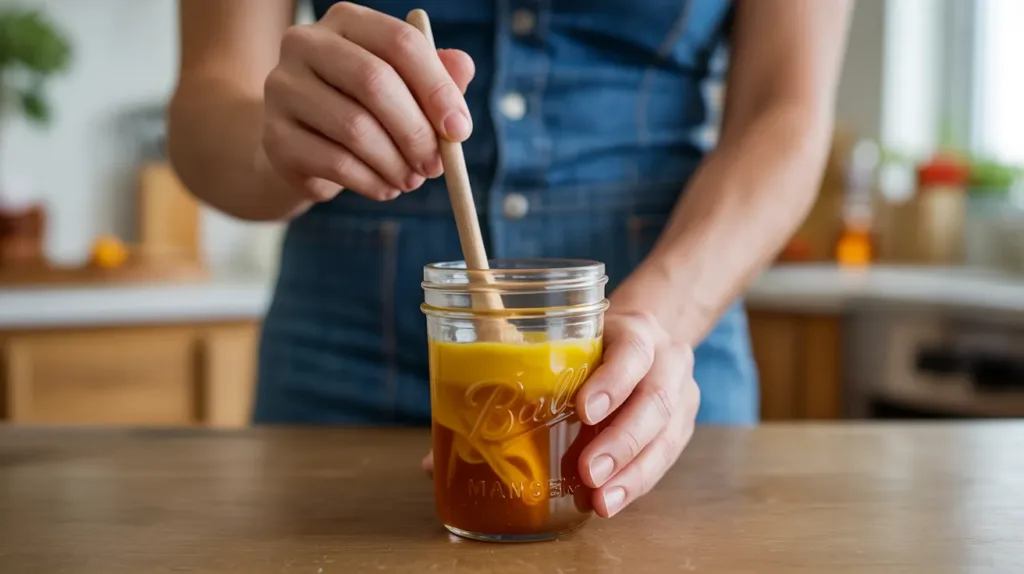
I make this in a small glass mason jar every two weeks. Eight minutes of prep, then it’s a spoonful each morning with no thinking required. This is lazy meal prep at its most literal.
Ingredients
- 4 tablespoons raw honey (tualang or manuka preferred; quality raw local honey works as a backup)
- 2 teaspoons ground turmeric
- 1 teaspoon ground Ceylon cinnamon
- 2 tablespoons fresh lemon juice
- 1/8 teaspoon freshly ground black pepper
Yield: 14 servings (one teaspoon each) | Prep time: 8 minutes | Cook time: 0 minutes
Instructions
- Add the raw honey to a small clean glass jar or bowl.
- Spoon in the ground turmeric and Ceylon cinnamon.
- Squeeze in the fresh lemon juice.
- Add the black pepper.
- Stir slowly and thoroughly until fully combined with no dry pockets of spice visible. This takes a minute or two don’t rush it.
- Transfer to a small glass jar with a tight lid and refrigerate.
Do not heat the honey. Heat destroys enzymes and reduces the antioxidant activity that makes raw honey worth using in the first place. Room temperature mixing is all you need.
How to Take It
One level teaspoon each morning, ideally 20 to 30 minutes before breakfast. Some people stir it into warm (not boiling) water. Others eat it straight off the spoon. Both work. Consistency matters more than method.
Storage
Keep the jar in the refrigerator. Stays fresh and potent for up to two weeks. The honey is naturally antimicrobial so the blend doesn’t spoil quickly, but the lemon juice loses freshness around that two-week mark. Make a new batch at that point. It takes less time than brewing a pot of coffee.
The Tualang Upgrade (Optional)
If you can source tualang honey, this version has a stronger brain-supportive profile:
- 3 tablespoons tualang honey
- 1 tablespoon raw manuka honey
- 2 teaspoons ground turmeric
- 1 teaspoon Ceylon cinnamon
- 2 tablespoons fresh lemon juice
- 1/8 teaspoon black pepper
Same method, same one-teaspoon daily dose. The flavor is earthier and more complex. I find it more interesting to take every morning it actually tastes like something intentional rather than just sweet.
Substitutions and Variations
- No tualang or manuka? Use the best raw local honey you can find. Avoid anything that comes in a plastic bear-shaped bottle or says “pure honey” without specifying raw and unfiltered.
- No Ceylon cinnamon? Regular cassia cinnamon works fine in a pinch. Just don’t take very high amounts long-term cassia has more coumarin than Ceylon, which can be an issue at high doses.
- Hate lemon? A small splash of apple cider vinegar gives a similar bright, acidic balance. Or just skip it the blend still works, it just tastes a bit earthier.
- Fresh turmeric root? Absolutely. Grate about 1 teaspoon of fresh turmeric in place of the powder. The flavor is brighter and the active compounds are more potent. Fair trade-off for a bit of extra prep.
- Want to drink it instead? Stir one teaspoon into 8 oz of warm water for a gentler version. This is the Asian honey water approach great for building the habit before committing to the concentrated blend.
What to Pair This With for Better Results
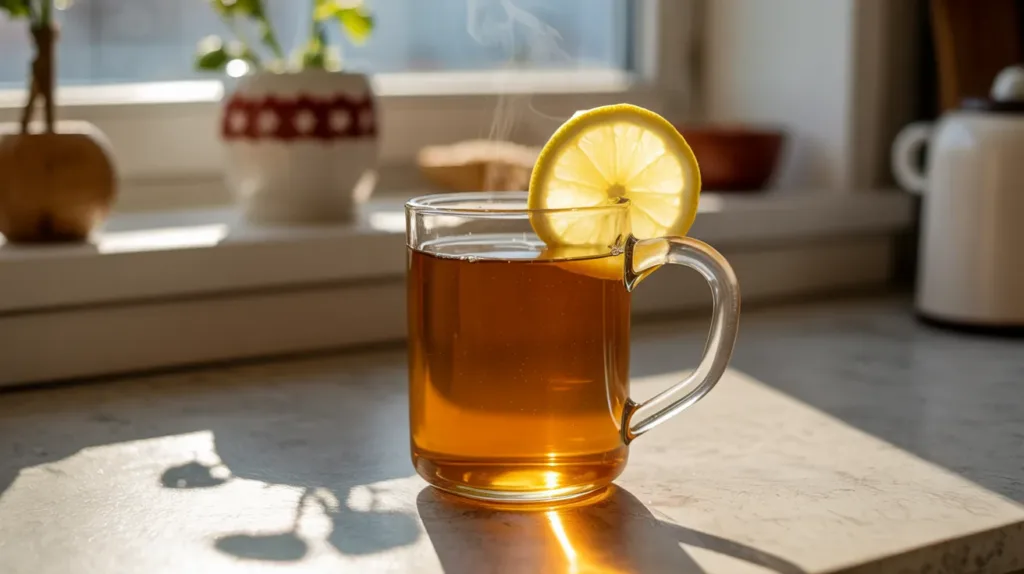
I’ll be honest: this protocol works best when it’s not doing all the work alone. The people who notice the most from a morning ritual like this are usually the ones who’ve cleaned up a few other habits at the same time.
- Sleep: The brain clears metabolic waste including amyloid proteins primarily during deep sleep. Seven to nine hours isn’t optional for brain health.
- Movement: Even 20 to 30 minutes of walking daily increases BDNF, the same compound tualang honey supports. These things compound.
- Reducing ultra-processed food: Blood sugar spikes accelerate the exact inflammatory pathways this protocol works to calm. Cutting back on the processed stuff lets the honey blend actually do its job.
- Cognitive engagement: Reading, learning new skills, staying socially connected. These build neural reserve the brain’s version of savings for a rainy day.
If you’re also curious about other wellness drink trends that have been making the rounds, I looked into the Canaan honey trick benefits and risks a while back some real overlap there in terms of the underlying honey science. And if blood sugar balance is something you’re managing, my post on honey water for weight loss covers the metabolic side of daily honey habits in more detail.
On the gelatin side of viral wellness trends, I’d also point you toward my gelatin trick reviews and the what works, what doesn’t breakdown if you want a similar honest look at another trending recipe.
Nutrition Info (Per Serving)
- Serving size: 1 teaspoon
- Calories: ~22
- Carbohydrates: 6g
- Sugar: 5g
- Protein: 0g
- Fat: 0g
- Sodium: 1mg
FAQs About the Asian Honey Protocol Recipe
What are the exact Asian honey protocol ingredients?
The five core ingredients are raw honey (tualang or manuka preferred), ground turmeric, ground Ceylon cinnamon, fresh lemon juice, and a pinch of black pepper. Each one plays a specific role. The black pepper especially isn’t optional piperine in black pepper increases curcumin absorption from the turmeric by up to 2,000%, which is what makes the turmeric actually useful rather than decorative.
How long does one batch last and how do I store it?
One batch gives you about 14 daily servings roughly two weeks’ worth. Store it in a small glass jar with a tight lid in the refrigerator. The honey is naturally antimicrobial so it doesn’t spoil quickly, but the lemon juice starts losing freshness around the two-week mark. Make a fresh batch at that point. Eight minutes and you’re set for another two weeks.
Does this actually help with memory and brain health?
The honest answer: the individual ingredients all have genuine research behind them for reducing oxidative stress, inflammation, and amyloid buildup in the brain. Tualang honey in particular has studies showing memory improvements and increased BDNF (brain fertilizer, essentially) in animal models. What doesn’t exist yet is a large-scale human clinical trial on this specific blend. So this is a well-reasoned, research-informed wellness habit not a cure for dementia or Alzheimer’s disease.
Can I take this as a drink instead of straight off a spoon?u003c/strongu003e
u003cpu003eYes, and a lot of people find this easier to stick with. Just stir one teaspoon of the blend into 8 oz of warm (not boiling) water. This is the Asian honey water version of the protocol. Boiling water will degrade the enzymes in the raw honey, so keep it warm but not hot. Either method works pick whichever one you’ll actually do every morning.
Are there any safety concerns or people who should avoid this?
A few worth knowing. People on blood thinners should check with their doctor before starting turmeric and cinnamon can have mild blood-thinning effects at daily doses. The same goes for anyone on diabetes medication, since both honey and cinnamon affect blood sugar. And obviously, raw honey should never be given to infants under 12 months. For most healthy adults, one teaspoon a day is a safe, moderate amount. When in doubt, run it by your doctor first.
What’s the difference between manuka and tualang honey for this recipe?
Both are high-quality raw honeys with significantly stronger antioxidant and anti-inflammatory properties than standard commercial honey. Manuka comes from New Zealand and has very high levels of methylglyoxal, which gives it strong antimicrobial activity. Tualang is wild Malaysian honey with the strongest brain-specific research, including studies on memory, BDNF, and neuroprotection. Either works well here. Tualang is harder to find and a bit more expensive, but it’s the one the brain health research points to most consistently.
What are three foods that actually support brain health?
Research consistently highlights three categories. First, fatty fish rich in omega-3 DHA and EPA these are structural components of brain cell membranes. Second, leafy greens like spinach, kale, and broccoli, which supply folate, vitamin K, and lutein linked to slower cognitive decline. Third, polyphenol-rich foods including berries, extra virgin olive oil, turmeric, and raw honey which reduce oxidative stress and chronic inflammation at the root of neurodegeneration. The Asian honey protocol draws directly from that third category.
Ready to Try the Asian Honey Protocol?
I’ve been making this blend for a few months now. My jar lives in the fridge door, right next to the oat milk. Every morning it’s about ten seconds a spoon of the blend, either straight or stirred into warm water while the coffee brews.
I can’t tell you it’s reversing anything. I won’t make that claim. What I can tell you is that it feels good to have a morning habit built around ingredients that genuinely have something going for them something grounded in both traditional practice and real research rather than just starting the day with caffeine and optimism.
If Katie’s TikTok instincts led us to this one, I’ll take it.
If you try the recipe, drop a comment and let me know how it goes. And if you want to explore more of the honey science we’ve been digging into around here, check out what we found on common honey myths versus facts a lot of what people think they know about honey turns out to be wrong in interesting ways.
What’s Cooking in Your Kitchen?
Tried this recipe your own way? I want to see it. Snap a quick pic and tag us, or drop a comment with what you tweaked. Lazy cooking works best when we swap ideas and your spin might be the next Lazy Meal Prep favorite.
Post your photo and tag @lazy_mealprep I’ll share my favorites in stories.
Asian Honey Protocol
Ingredients
For the blend
- 4 tablespoons raw honey (tualang or manuka preferred) Quality raw local honey works as a backup.
- 2 teaspoons ground turmeric
- 1 teaspoon ground Ceylon cinnamon Avoid high amounts long-term, as it has more coumarin than cassia.
- 2 tablespoons fresh lemon juice
- 1/8 teaspoon freshly ground black pepper Essential for increasing curcumin absorption.
Instructions
Preparation
- Add the raw honey to a small clean glass jar or bowl.
- Spoon in the ground turmeric and Ceylon cinnamon.
- Squeeze in the fresh lemon juice.
- Add the black pepper.
- Stir slowly and thoroughly until fully combined, ensuring no dry pockets of spice are visible.
- Transfer to a small glass jar with a tight lid and refrigerate.
Notes
Nutrition
What’s Cooking in Your Kitchen?
Tried this recipe your own way? I want to see it. Snap a quick pic and tag us, or drop a comment with what you tweaked. Lazy cooking works best when we swap ideas and your spin might be the next Lazy Meal Prep favorite.
Post your photo and tag @lazy_mealprep I’ll share my favorites in stories.