
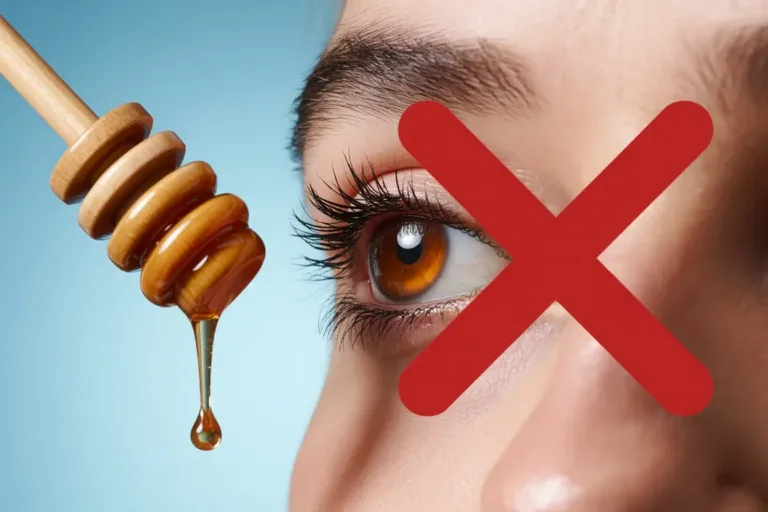
honey eye drops risk is one of those topics that pops up in my inbox whenever I post a honey dessert. I get it. Honey feels soothing and natural, so it sounds harmless. But eyes are delicate, and kitchen ingredients don’t always belong there. Before we dive in, if you’ve seen viral hacks about honey for wellness, you might like this balanced take on a popular trick: Canaan Honey Trick Benefits and Risks. Now, let’s talk about what’s actually safe for your eyes, and where honey fits in that picture. Spoiler: your corneas are not a buffet.

Why People Try Honey in Eyes
Let me guess. You rubbed your eyes after a long day, felt that dry, scratchy sting, and remembered a relative swearing by a drop of honey for redness. Or maybe you scrolled past a video promising brighter eyes with a dab of raw honey. I love honey for cooking and baking, but I also love keeping my vision crisp enough to admire a golden caramel drizzle. So I looked into it closely.
Where the trend started
Most of the hype comes from the idea that honey has natural antibacterial properties. That part is true in the right settings. Honey can help protect food from spoiling and even support wound care when it’s medical grade and used properly on skin. From there, the story turns into a leap. People think if it can help on skin, maybe it can help the eyes. That leap skips a lot of science about eye safety.
There’s also the romance of old-fashioned remedies. I respect traditional wisdom, and I’m always curious when a family remedy shows up alongside a recipe card. I just want to make sure it’s safe. Honestly, when I crave a honey fix, I reach for a recipe like this fun kitchen trick I once tried and wrote about: honey trick recipe. Keep the sweet stuff on your spoon, not in your eye.
Here’s the bottom line that you’ll see me repeat: Honey & Eyewash: Is It Safe to Use Honey Around or In Your Eyes? No kitchen honey is sterile enough for direct eye contact. Period.
“I tried a tiny smear of raw honey near my inner eyelid after seeing it online. Within minutes, my eye felt hot and watery. Urgent care told me to flush it and never do that again. Lesson learned: honey goes in tea, not eyes.”
Honey & Eyewash: Is It Safe to Use Honey Around or In Your Eyes? My answer as your food-loving friend: save honey for your plate, not your peepers.
Medical Risks & Dangers
What actually happens when honey touches your eye
Eyes are insanely sensitive. Even a clean contact lens can irritate your cornea if it’s dry or dirty. Now imagine a sticky, sugary liquid that can harbor spores, pollen, and bacteria. That is what you’re putting on a very delicate surface. It’s like pouring syrup on silk and hoping it rinses off perfectly. It won’t.
Potential problems you might face:
- Infection risk: Honey from your pantry is not sterile. Putting it in your eye invites germs to a party your eye can’t easily shut down.
- Chemical burns or stings: Honey’s acidity can burn and trigger inflammation.
- Allergic reactions: If you’re sensitive to pollen or bee products, your eye can swell, itch, and tear up fast.
- Vision blur and debris: Honey is thick. It can smear across the cornea and trap tiny particles.
- Delayed care: Honey might mask symptoms long enough to delay proper treatment.
Even if someone claims it felt soothing, that doesn’t make it safe. Your eye can feel temporary relief while still being harmed underneath. And remember the big question we’re tackling: Honey & Eyewash: Is It Safe to Use Honey Around or In Your Eyes? In simple words, it’s not.
If you’re craving something sweet after resisting a risky hack, try keeping honey where it shines. Cook a cozy dinner like these bold, juicy honey sriracha chicken thighs instead of experimenting with your eyes.
Doctor Warnings
Eye doctors are not trying to spoil your fun. They just see what happens when home experiments go wrong. They’ll tell you that only sterile, ophthalmic products belong anywhere near your eyeballs. That means anything straight from your pantry is a hard no. Not because honey is “bad,” but because your eyes are too precious for that gamble.
Doctors caution that even rinsing after honey contact can leave residue that keeps irritating your cornea. If you get honey in your eye accidentally, flush it with sterile saline or clean water for at least 15 minutes, and call your optometrist. If pain, redness, or blurred vision persists, go in immediately. No DIY fix is worth risking your sight.

Also, be aware of online anecdotes that blur the difference between medical-grade honey for skin and edible honey for cooking. They aren’t the same. And neither belongs inside the eye. If you need a distraction while you wait for your appointment, cook something fast and tasty like this 15 minute honey garlic shrimp. It’s a better use of your honey and your time.
If you’re still wondering, Honey & Eyewash: Is It Safe to Use Honey Around or In Your Eyes? Doctors would say no, especially without sterile processing, and even then, it’s not a typical or recommended eye treatment. Keep it out of your eyes and stick with products designed for vision care.
Safe Eye Care Alternatives
Simple plan for irritated eyes at home
Before you reach for anything sweet, try these safer, simpler steps. They’re boring compared to viral hacks, but they actually work. And they won’t make your optometrist groan.
- Sterile saline rinse: Use store-bought sterile saline to gently flush out dust or mild irritants.
- Preservative free artificial tears: These soothe dryness and are formulated for the eye’s pH and comfort.
- Cold compress: For puffiness and itch from allergies, a clean cold compress can calm things down.
- Warm compress: For gritty, tired eyes, a warm compress can loosen oil glands along the eyelid.
- Antihistamine drops: If allergies are the culprit, check with your doctor or pharmacist about safe over the counter options.
- Medical care when needed: If you have pain, light sensitivity, or vision changes, skip DIY and call a pro.
Want to put honey to better use while you treat your eyes properly? Bake a small tray of chewy honey sesame cookies and let your eyes rest while they cool. Honest to goodness, the only time the phrase Honey & Eyewash: Is It Safe to Use Honey Around or In Your Eyes? should cross your mind is when you remember not to try it.
Common Questions
Can I put raw honey in my eyes if it’s organic?
No. Organic doesn’t mean sterile. Raw honey can still carry pollen, spores, and bacteria that don’t belong in the eye.
What about medical grade honey?
Medical grade honey is formulated for skin and wound care, not eye care. Unless your eye doctor explicitly prescribes a sterile eye product, don’t use it in or on your eye.
I accidentally got honey in my eye. What should I do?
Flush with sterile saline or clean water continuously for at least 15 minutes. If redness, pain, or vision changes continue, contact an eye doctor right away.
Is manuka honey safer for eyes?
Manuka honey is popular in skincare, but it’s not an approved eye treatment. Safer options include sterile artificial tears and doctor recommended drops.
So is honey totally off limits for wellness?
Not at all. Honey can be part of a healthy kitchen. Use it in cooking instead of on your eyes. A little goes a long way in savory dishes and sweets.
A sweet but safe takeaway
We covered the biggie: Honey & Eyewash: Is It Safe to Use Honey Around or In Your Eyes? For home cooks and snack lovers like us, the safest path is clear. Honey belongs in recipes, not in or around your eyes. If you want more background on honey’s safety, check reputable sources like Honey: Overview, Uses, Side Effects, Precautions, Interactions … and this easy explainer on Honey in Eyes: Uses, Benefits and Precautions. Now close the bathroom cabinet, open the pantry, and make something delicious instead. Your eyes and your taste buds will both be happier.