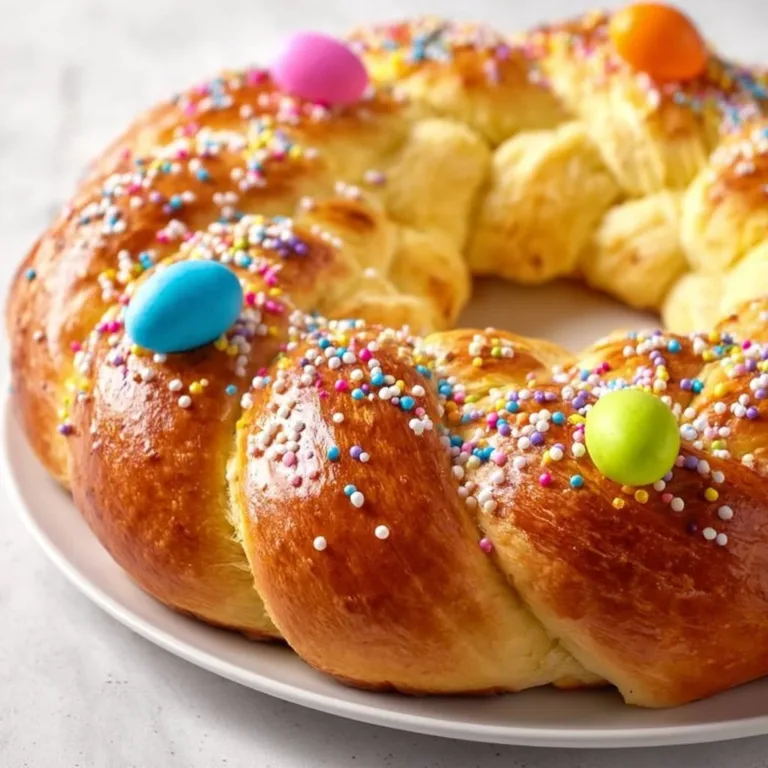
Start with the smell. A warm, slightly sweet dough browning in the oven, the house filling up with that cozy, egg-and-butter aroma. Kids drift from screens to the kitchen. Someone asks when it will be ready. You tell them to hang tight, because this Easter Bread is going to be worth the wait.
I like to keep this recipe easy enough for a weeknight but special enough for a holiday. If you want to try a playful, cut-up dessert that pairs with this loaf, take a look at my simple dessert project for beginners, beginner Easter bunny cut-up cake, for an extra round of smiles.
Why Easter Bread Deserves a Spot in Your Weeknight Rotation

This loaf hits a sweet spot between comfort and convenience. It takes a little time to rise, but the hands-on work is short and tidy. You mix, knead a bit, let it rest, braid, and bake. That pacing makes it perfect for evenings where the cooking needs to fit around homework, calls, or a quick backyard game.
It is forgiving. The dough is soft and forgiving to kneading mistakes. A slightly over-floured surface is not the end of the world. You will end up with a glossy, golden exterior and a soft, slightly chewy interior that’s perfect for slicing.
Families love it. Kids can help shape the braid and press the colored eggs into place. It turns a plain dinner into something to remember. Meanwhile, you keep the cleanup light and the flavor high. If you like one-pan, easy bakes, you might also enjoy the banana bread page I wrote with no extra fuss, banana bread without baking soda.
How to Make Easter Bread the Easy Way
“If it smells this good halfway through, you know dinner’s gonna be great.”
Start with a quick overview so you know what to expect. You activate the yeast in warm milk with sugar, then mix the wet into the dry. A short knead brings the dough together. After a rise, you braid three strands, tuck colored eggs into the braid, let it rest again, and then bake to a deep golden color.
Look for a glossy surface and a warm, springy feel when the rise is done. The interior should be pale and soft when you slice it, with a faint sheen from the butter. The scent of baked milk and butter is the cue that you nailed it.
Ingredients You’ll Need
4 cups all-purpose flour
1/4 cup sugar
1 packet active dry yeast
1 teaspoon salt
1 cup milk, warmed
1/4 cup butter, melted
2 large eggs
Colored eggs (for decoration) clearly one per line
Friendly notes: no fancy flour needed. Stick to regular all-purpose for the best balance between tenderness and chew. Use warm, not hot, milk to wake up the yeast. If your kids want to help, let them pick the colored eggs. Don’t skip the eggs for decoration; they make the braid feel festive.
If you like to keep a few baking shortcuts on hand, I also have a basic banana bread recipe that uses pantry staples and simple steps, banana bread. It’s the kind of thing I turn to when life is busy but dessert needs to happen.
Step-by-Step Directions
- In a bowl, mix the warm milk with sugar and yeast. Let it sit for 5-10 minutes until frothy.
Keep it warm but not hot. If the mixture bubbles and smells slightly yeasty, you’re good. If nothing happens in 10 minutes, try fresh yeast. - In a large mixing bowl, combine flour and salt.
Stir them quickly so the salt does not sit in one spot next to the yeast later. A whisk works fine here. - Add the yeast mixture, melted butter, and eggs to the flour.
Mix until a loose dough forms. It may look shaggy at first. That’s normal. - Knead the dough on a floured surface until smooth.
Work for about 6 to 8 minutes by hand. If it sticks, sprinkle a little flour on the board. Don’t overdo it; the dough should remain soft. - Place the dough in a greased bowl, cover, and let it rise for 1 hour.
Choose a warm corner of the kitchen or the oven with the light on. The dough should double in size. - Once doubled in size, punch down the dough and divide it into three strands.
Press gently to deflate. If the dough bounces back slowly, it’s ready to shape. - Braid the strands and place in a greased baking dish.
Pinch the ends to seal. Aim for an even braid; it helps the loaf bake uniformly. - Tuck colored eggs into the braid.
Press each egg gently into the dough so they sit snugly. They will stay in place as the loaf rises and bakes. - Let it rise for another 30 minutes.
Cover loosely with a towel or plastic wrap. The second rise gives the loaf a lighter texture. - Preheat the oven to 350°F (175°C).
Give it a full preheat so the loaf begins cooking right away. Consistent heat equals even color. - Bake for 25-30 minutes, or until golden brown.
A little browning is good. If the top gets too dark, tent with foil for the last 5 to 10 minutes. - Allow to cool before serving.
A gentle rest makes slicing cleaner. It also keeps the center from being too gummy.
Quick tips along the way: When the dough feels tacky but springs back with a poke, that’s perfect. If you want a shiny top, brush the loaf with a beaten egg before baking. Don’t stress if the braid looks imperfect. Imperfection tastes great.
Bringing Easter Bread to Dinner
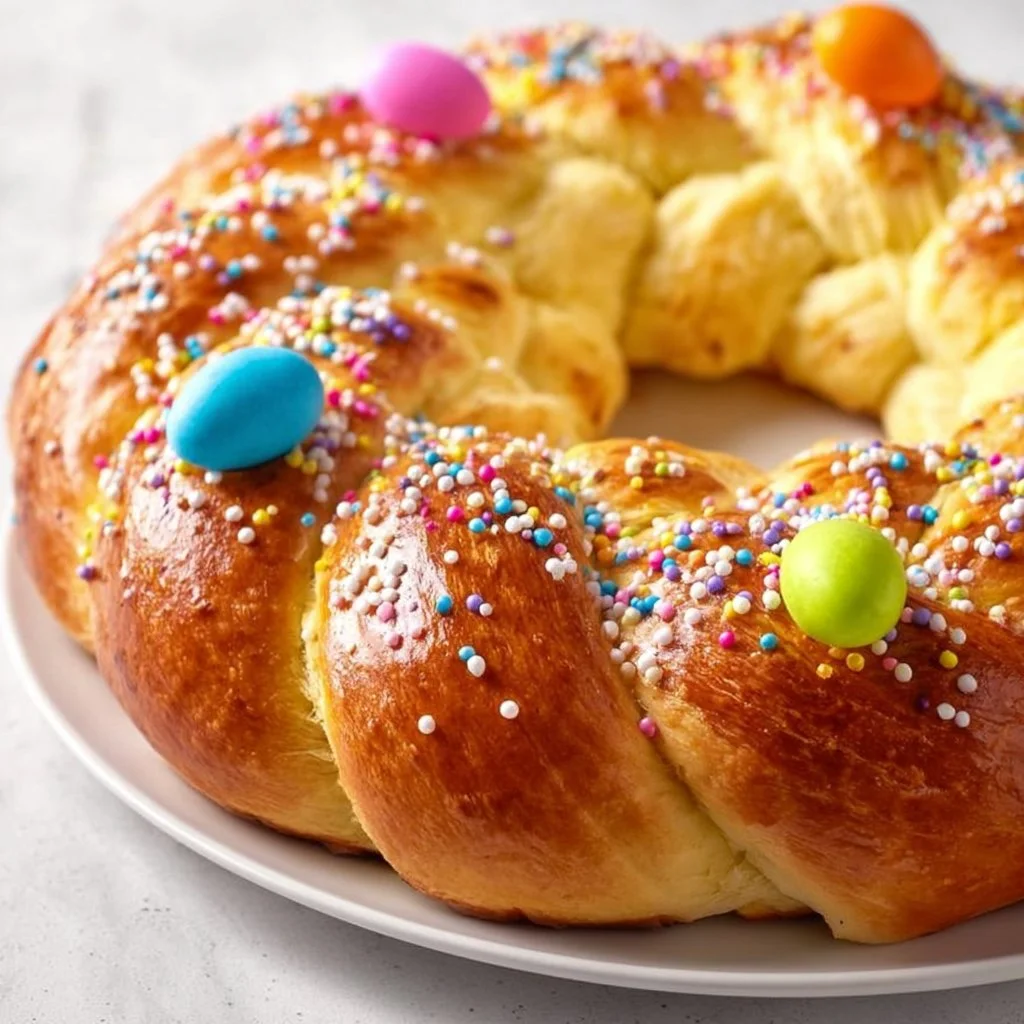
This bread works two ways at the table. Serve it family-style with slices on a big platter. Or pack slices for an evening picnic or to-go meal boxes. It pairs beautifully with simple toppings like butter, jam, or a smear of ricotta.
Think about sides that match the comforting tone of the loaf. A simple green salad with lemon dressing gives contrast. Roasted vegetables add color and substance. For a brunch vibe, serve with scrambled eggs and smoked salmon.
If you want to make it extra special, heat slices briefly in a skillet with a pat of butter. That gives the crust a bit of crispness and warms the crumb through. Kids usually prefer it warm and a little sticky. Adults can enjoy it with a cup of coffee.
Storage & Reheat (No Soggy Leftovers)
Cool completely before storing. If you seal it while still warm, condensation will make the crust soggy. Wrap the loaf in plastic wrap or store several slices in an airtight container.
For short-term storage, the loaf keeps well at room temperature for up to two days. After that, move it to the fridge to be safe. Refrigeration can dry the crumb, so use within a week if kept cold.
Freezing works well for longer storage. Slice before freezing and wrap individual slices in plastic wrap. Put them in a freezer-safe bag. Thaw in the fridge overnight or at room temperature for an hour.
To reheat, the oven is best. Warm at 325°F (160°C) for 8 to 12 minutes, depending on slice thickness. The microwave can work in a pinch, but it often softens the crust too much. If you do use the microwave, give a 10 to 20 second zap and then finish in a hot skillet for texture.
Ethan’s Notes From the Kitchen
I have made this loaf many times, often with a sleepy toddler in one arm and a mixing bowl in the other. It lives in my rotation because it is forgiving and pleasing to everyone.
One time I used whole milk and forgot to melt the butter. The loaf still turned out fine. The point is: don’t overthink it. Small mistakes usually make a loaf that still tastes like home.
You’ll want a bench scraper. It saves time cleaning flour off the counter and helps you handle the dough without it sticking to your hands.
If you prefer to prep faster on busy days, mix the dough the night before and let it rise in the fridge slowly. Take it out in the morning to finish shaping and baking. Your family will think you worked magic.
Quick Tips & Shortcuts
- Use room temperature eggs to bring the dough together faster. Cold eggs slow the mixing.
- If you are short on time, make one long braid and bake it on a rimmed sheet. It saves dish space and fits more easily into a busy schedule.
- Swap milk for half milk and half yogurt for an extra tender crumb. A cup total still works.
- Want different shapes? Make smaller braids and bake as individual loaves for grab-and-go breakfast.
If you like to tweak sweet bakes for texture or add nuts, I keep a straightforward banana nut approach that translates well to small add-ins like chopped almonds, banana nut bread recipe.
Variations That Work
Add citrus zest. A teaspoon of orange or lemon zest in the dough brightens the flavor and pairs nicely with butter.
Mix in dried fruit. Chopped apricots, raisins, or cranberries work well. Soak them briefly in warm water if they look dry so they stay plump in the loaf.
Go savory. Omit the sugar and add a tablespoon of olive oil, some grated Parmesan, and herbs like rosemary. The dough handles savory additions surprisingly well and makes an excellent companion to soups.
Stuff it. Make a sweet filling with cinnamon and brown sugar, or try a ricotta and lemon filling that adds richness. Roll the dough before braiding and you have a filled loaf that looks impressive.
Make mini loaves. Divide the dough into smaller portions and braid or twist each one. They bake faster and make great gifts or packed lunches.
FAQs About Easter Bread
Can I make this ahead?
Yes. You can mix the dough the night before and let it rise slowly in the fridge. The slow rise adds flavor and gives you a hands-off solution when mornings are busy.
Do I need colored eggs?
No. The colored eggs are traditional and festive, but plain eggs or even small dough balls will work if you want the look without extra Easter eggs.
What if my dough does not rise?
Warm the oven light and place the covered bowl there. If it still does not rise after 30 minutes in a warmer spot, your yeast might be inactive. Start over with fresh yeast.
How do I keep the top from burning?
Tent with foil for the last 10 minutes of baking if it is browning too fast. That will prevent over-browning while the center finishes baking.
Is it okay to use instant yeast instead of active dry?
Yes. You can use instant yeast directly in the flour. Cut the proofing step a little shorter if you want, and watch the dough rather than the clock.
A Final Bite
If your family licks the pan clean, don’t say I didn’t warn you. This is the kind of bread that makes weeknights feel a little more like a small celebration.
Baking bread is part craft and part patience. Keep it simple, follow the steps, and don’t be afraid to make it your own. You’ve got this.
Conclusion
If you want more classic inspiration for this style of loaf, I often look to time-tested versions like Italian Easter Bread – Sprinkle Bakes for techniques and presentation ideas. For a deeper traditional take and pro tips, check out this detailed guide titled Traditional Italian Easter Bread Recipe.

Easter Bread
Ingredients
Dough Ingredients
- 4 cups all-purpose flour No fancy flour needed.
- 1/4 cup sugar
- 1 packet active dry yeast Make sure it’s fresh.
- 1 teaspoon salt Mix quickly with flour.
- 1 cup milk, warmed Use warm, not hot, milk.
- 1/4 cup butter, melted Melt before use.
- 2 large eggs Use room temperature eggs.
Decorative Ingredients
- colored eggs pieces colored eggs (for decoration) One per braid section.
Instructions
Preparation
- In a bowl, mix the warm milk with sugar and yeast. Let it sit for 5-10 minutes until frothy.
- In a large mixing bowl, combine flour and salt. Stir quickly to prevent the salt from sitting near the yeast.
- Add the yeast mixture, melted butter, and eggs to the flour. Mix until a loose, shaggy dough forms.
- Knead the dough on a floured surface until smooth, about 6 to 8 minutes. If it sticks, sprinkle a little flour.
Rising
- Place the dough in a greased bowl, cover, and let it rise in a warm place for 1 hour until doubled in size.
- Once doubled, punch down the dough and divide it into three strands. Braid the strands and place in a greased baking dish.
- Tuck colored eggs into the braid and press them gently into the dough.
- Let it rise for another 30 minutes, covered loosely.
Baking
- Preheat the oven to 350°F (175°C).
- Bake for 25-30 minutes, or until golden brown. If the top gets too dark, tent with foil for the last 5 to 10 minutes.
- Allow to cool before serving.