
Medical Disclaimer: This recipe is intended as general nutritional information for people following a bariatric-friendly eating plan. It is not a substitute for guidance from your bariatric surgeon, dietitian, or healthcare provider. Always follow the specific dietary protocol your medical team has given you, especially in the early weeks after surgery.
A friend of mine had gastric sleeve surgery last year. A few weeks post-op, she texted me at 9pm: “I need something that tastes like real food, hits my protein goals, and doesn’t hurt going down. Everything I find online is either too sweet or missing the protein count.” I knew exactly what to send her.
Bariatric gelatin gets passed over a lot because people assume it’s just hospital Jell-O. It’s not. Done right, it’s a genuinely useful high-protein snack that fits every stage of the bariatric diet from full liquids all the way through maintenance. I’ve been making gelatin recipes on this site for a while, and the bariatric version has its own rules that are worth understanding before you start.
This article covers the full bariatric gelatin recipe with protein powder, a homemade version without supplements, how it fits different post-surgery stages, and the five mistakes that turn a useful recovery snack into something that sets wrong and sits wrong. Whether you’re in week two post-op or two years out and just want a clean high-protein snack, this is the recipe I’d hand you.
What This Guide Covers
- The full bariatric gelatin recipe both the protein powder version and the homemade version
- Which stage of the bariatric diet each version fits (liquid, pureed, soft foods, maintenance)
- How to hit 15 to 20 grams of protein per serving without it tasting chalky
- The Dr. Gupta bariatric gelatin approach and how it compares
- 5 mistakes bariatric patients make with gelatin recipes and how to avoid them
What Is Bariatric Gelatin?
Bariatric gelatin is a modified gelatin recipe designed to meet the nutritional priorities that matter most after weight loss surgery: high protein, very low sugar, easy digestibility, and small serving sizes with maximum nutritional density. Standard Jell-O doesn’t qualify. It’s high in sugar, low in protein, and essentially nutritional filler.
The bariatric gelatin recipe uses unflavored gelatin as the base either plain gelatin powder or a collagen-based gelatin combined with a protein source like unflavored protein powder or Greek yogurt. The result is a snack that delivers 15 to 22 grams of protein in a 4-ounce serving that most post-surgery stomachs can handle without discomfort.
Research from the National Institutes of Health on post-bariatric nutrition consistently emphasizes protein as the top nutritional priority after bariatric surgery, with most programs recommending 60 to 80 grams of protein daily at minimum. A well-made bariatric gelatin recipe puts a meaningful dent in that target in one small serving.
In practice, it’s the snack that replaced the afternoon protein shake in my friend’s kitchen six months after her surgery and the one she still makes every Sunday for the week ahead, two years later.
Bariatric Gelatin Recipe Ingredients and What You Need
There are two versions here. The protein powder version gives the highest protein count and is best for early stages post-surgery. The Greek yogurt version is slightly lower in protein but has better texture and taste, and works well from soft foods stage onward.
Version 1: Protein Powder Bariatric Gelatin (highest protein)
- 1 packet (7g / 1 tablespoon) unflavored gelatin powder
- 1 cup cold water
- 1/2 cup hot water
- 1 scoop (25 to 30g) unflavored or vanilla whey protein isolate powder
- 1 tablespoon fresh lemon juice
- Liquid stevia or monk fruit sweetener to taste
- Pinch of sea salt
- Optional: 1/4 teaspoon vanilla extract
Version 2: Greek Yogurt Bariatric Gelatin (better texture, great for soft food stage)
- 1 packet (7g / 1 tablespoon) unflavored gelatin powder
- 1 1/2 cups cold water, divided
- 3/4 cup plain non-fat Greek yogurt
- 1 tablespoon fresh lemon juice
- Liquid stevia to taste
- Pinch of sea salt
A note on protein powder: unflavored whey isolate mixes the cleanest and has the least impact on flavor. Avoid casein protein in this recipe it doesn’t dissolve well in liquid and creates a grainy texture in the finished gelatin. If you’re dairy-sensitive, an unflavored pea protein isolate works as a substitute, though the texture is slightly denser.
On sweeteners: stick to liquid stevia or monk fruit. Granulated sweeteners don’t dissolve properly in cooled gelatin liquid and leave gritty pockets. Sugar is off the table for most bariatric patients regardless, especially in early stages.
How to Make Bariatric Gelatin Step by Step
Step 1: Bloom the Gelatin
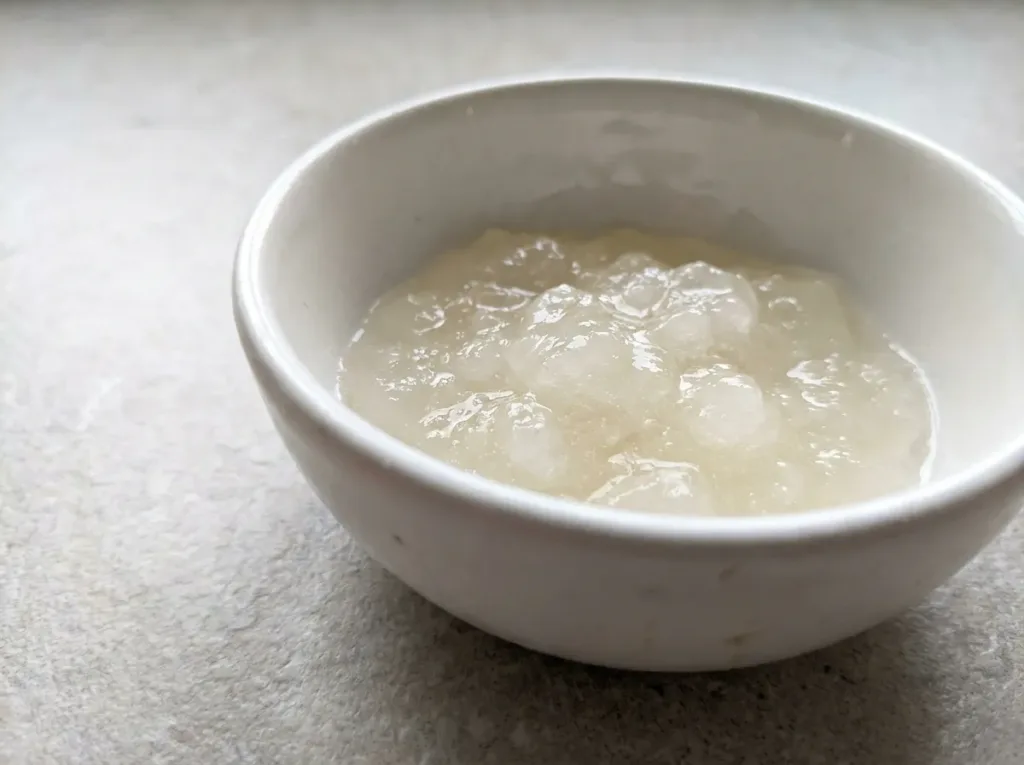
Pour 1/2 cup of cold water into a small bowl. Sprinkle the gelatin powder evenly over the surface. Don’t stir. Let it sit for exactly 2 minutes. The gelatin will absorb the water and turn soft and swollen. This step is non-negotiable. Skip it and you get clumps. I’ve seen this mistake in every poorly-set gelatin recipe that crossed my counter.
Step 2: Dissolve Over Low Heat
Transfer the bloomed gelatin into a small saucepan. Add the remaining water, lemon juice, stevia, and sea salt. Stir over low heat for 2 to 3 minutes until fully dissolved. The liquid should be completely clear with no visible granules. Do not boil. Boiling degrades the gelatin proteins and weakens the set.
Step 3: Cool the Liquid to Warm
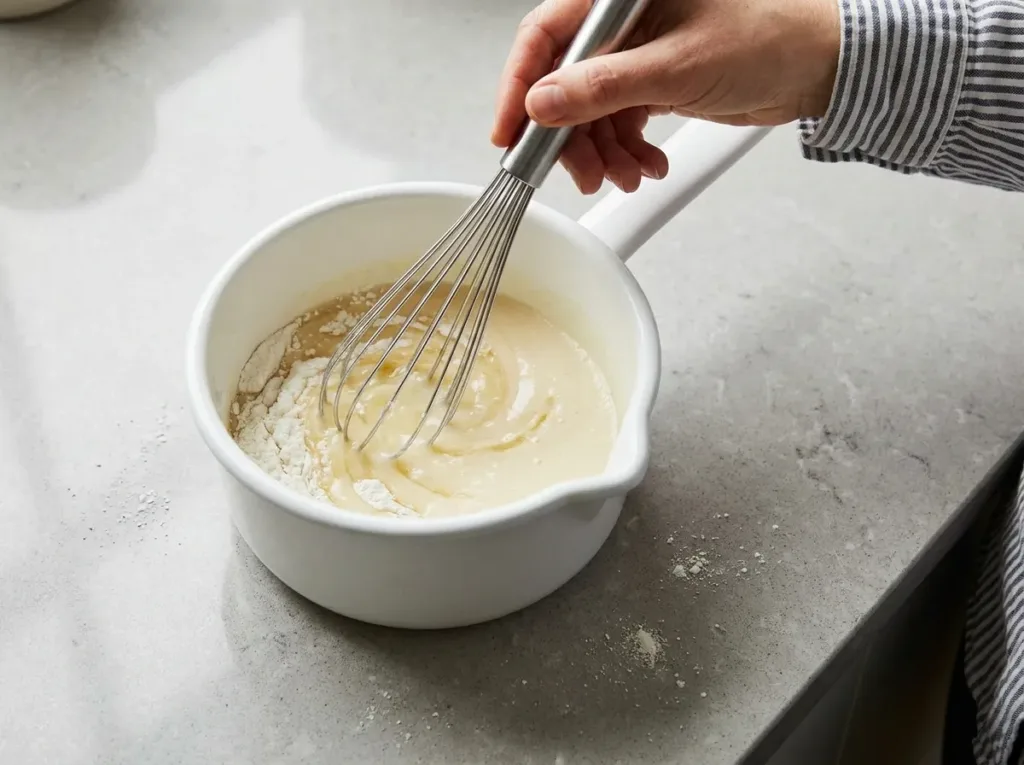
Remove from heat and let the liquid cool for 8 to 10 minutes. For the protein powder version this step is critical. Adding protein powder to hot liquid creates foam that ruins the texture of the finished gelatin. You want the liquid warm enough to dissolve the powder but not so hot it cooks it. Test by touching the side of the saucepan if it’s comfortable to hold, you’re ready.
Step 4: Add Your Protein Source
For Version 1: whisk in the protein powder gradually, a little at a time, to avoid clumping. Keep whisking until the mixture is completely smooth and uniform in color. For Version 2: whisk in the Greek yogurt until no white streaks remain. Either way, take your time here. A lumpy mixture sets lumpy, and lumpy gelatin is nobody’s idea of a good recovery snack.
Step 5: Pour Into Molds and Set
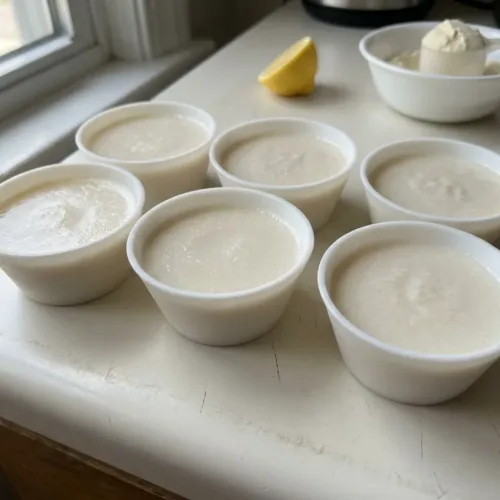
Pour into individual 4-ounce serving cups, small silicone molds, or a glass baking dish. For bariatric portions, 4-ounce silicone cups are ideal the right size for a post-surgery stomach and they pop out cleanly. Cover with plastic wrap and refrigerate for at least 4 hours. Overnight is better. The longer it sets, the cleaner the texture and the easier it is to eat in small bites without it falling apart.
Bariatric Gelatin
Ingredients
For the Protein Powder Version
- 1 packet (7g / 1 tablespoon) unflavored gelatin powder
- 1 cup cold water
- 1/2 cup hot water
- 1 scoop (25 to 30g) unflavored or vanilla whey protein isolate powder
- 1 tablespoon fresh lemon juice
- Liquid stevia or monk fruit sweetener to taste
- 1 pinch sea salt
- 1/4 teaspoon vanilla extract (optional)
For the Greek Yogurt Version
- 1 packet (7g / 1 tablespoon) unflavored gelatin powder
- 1.5 cups cold water, divided
- 3/4 cup plain non-fat Greek yogurt
- 1 tablespoon fresh lemon juice
- Liquid stevia to taste
- 1 pinch sea salt
Instructions
Bloom
- Pour 1/2 cup cold water into a bowl. Sprinkle gelatin over surface. Do not stir. Let sit 2 minutes.
Dissolve
- Transfer to a saucepan with remaining water, lemon juice, stevia, and salt. Stir over low heat 2–3 min until fully dissolved. Do not boil.
Cool
- Remove from heat. Let cool 8–10 minutes until warm, not hot.
Add Protein
- Whisk in protein powder gradually (Version 1) or Greek yogurt (Version 2) until completely smooth.
Set
- Pour into 4-oz silicone cups. Cover and refrigerate at least 4 hours or overnight. Serve cold.
Notes
– Always bloom gelatin in cold water first — prevents clumping.
– For full liquids stage: reduce gelatin to 3/4 packet for a softer set.
– Do not freeze — breaks down gelatin network.
– Keeps covered in fridge up to 5 days.
– For Dr. Gupta approach: substitute collagen peptide powder for the unflavored gelatin.
– Dairy-free: use pea protein isolate instead of whey.
– Do NOT use casein protein — use whey isolate or pea isolate only.
Nutrition
Bariatric Gelatin by Stage: Which Version Fits Where
This is the question I get most often, so here’s a clear breakdown. Always confirm with your bariatric team first programs vary and individual recovery timelines differ.
| Stage | Typical Timing | Recommended Version | Notes |
|---|---|---|---|
| Full liquids | Days 3 to 14 post-op | Version 1, reduced gelatin for softer set | Use 3/4 packet gelatin for a looser texture. Confirm with your team. |
| Pureed foods | Weeks 2 to 4 | Version 1 or 2, standard set | Full recipe as written. Firm, smooth texture that holds its shape. |
| Soft foods | Weeks 4 to 8 | Version 2, add soft fruit if cleared | Soft berry pieces pressed in before setting add flavor variety. |
| Maintenance | 8+ weeks, long-term | Either version, any variation | Great as a daily high-protein snack. All flavor variations work here. |
One note on the full liquids stage: the standard recipe produces a firm set that may be too solid for some people in the earliest days post-surgery. Reducing the gelatin to 3/4 of a packet produces a softer, looser result that moves more like a thick liquid than a solid snack.
The Dr. Gupta Bariatric Gelatin Recipe Approach
If you’ve been researching bariatric gelatin, you’ve likely come across references to the Dr. Gupta bariatric gelatin recipe. The approach associated with this name emphasizes collagen-based gelatin rather than standard unflavored gelatin, combined with a protein isolate and minimal flavoring. The reasoning is that collagen protein offers amino acids particularly relevant to tissue healing after surgery glycine, proline, and hydroxyproline that standard whey protein doesn’t provide in the same ratios.

Perfect 4-ounce portion for a high-protein snack.
The practical difference: if you want to follow the Dr. Gupta-inspired approach, substitute the standard unflavored gelatin with a collagen peptide powder (such as Vital Proteins unflavored) and keep everything else the same. The set will be slightly softer since collagen peptides don’t gel as firmly as standard gelatin, but the amino acid profile is different and some bariatric programs prefer it during the healing stage specifically.
Both versions are nutritionally sound. The standard gelatin version sets firmer and is easier to handle. The collagen version is softer but targeted differently for early post-surgery recovery. I’ve made both and the standard version wins on texture. But if your bariatric team or dietitian recommends the collagen approach, the recipe steps are identical.
Why Bariatric Gelatin Works for Recovery and Weight Loss
Three things make this recipe worth making consistently, not just once.
Protein density in a tiny volume. After bariatric surgery, stomach capacity is dramatically reduced. A 4-ounce serving of the protein powder version delivers 18 to 22 grams of protein. That’s the protein equivalent of three eggs in a quarter-cup of food. Nothing else in that size fits that profile.
The texture works with a post-surgery stomach. Most high-protein foods in early recovery are chalky shakes or soft foods without much substance. Firm gelatin is different it has structure. You have to chew it slightly, which slows you down and triggers satiety signals more effectively than drinking the same calories in liquid form. People who’ve had bariatric surgery often feel more satisfied after a gelatin serving than after an equivalent protein shake.
It’s genuinely cheap and fast. A batch of six servings costs less than two dollars. The NIH Office of Dietary Supplements notes that protein adequacy is critical for wound healing and lean mass preservation both top priorities in bariatric recovery. This recipe is one of the simplest ways to support both consistently over time.
For a broader look at how gelatin supports weight management for people who haven’t had surgery, the gelatin trick recipe for weight loss covers the full mechanism.
Curious how the gelatin trick holds up outside the bariatric context? I ran a 30-day personal test on the standard version tracking hunger, results, and where the hype falls apart. Worth a read before setting your expectations: does the gelatin trick work for weight loss.
Bariatric Gelatin Recipe for Weekly Meal Prep
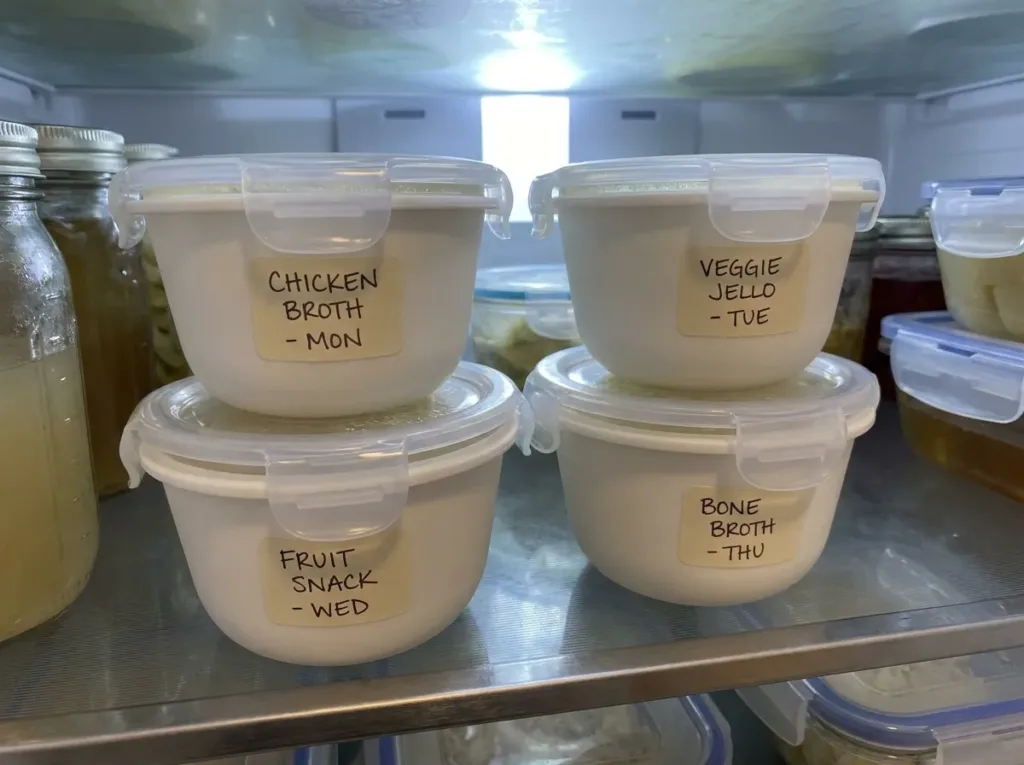
This recipe was designed for meal prep. Twenty minutes of active work on Sunday evening gives you six to eight servings in the fridge for the entire week.
Here’s how I’d set it up:
- Make one batch of Version 1 and one batch of Version 2 to rotate through variety matters when you’re eating the same snack every day
- Use 4-ounce silicone portion cups with snap-on lids they stack cleanly and the portion size is right for post-surgery eating
- Label each cup with the version and date made
- Add fruit or flavor toppings at serving time, not during prep keeps the texture consistent all week
Stored covered in the refrigerator, both versions keep well for five days. Don’t freeze them the protein network breaks down and you get a watery, grainy texture when it thaws. Not ideal under any circumstances, and especially not for someone in bariatric recovery.
If you’re looking for more high-protein snack options that work alongside this recipe, the high-protein meal prep for weight loss guide covers a full week of options that fit a similar nutritional profile.
5 Mistakes to Avoid With the Bariatric Gelatin Recipe
Using flavored gelatin like Jell-O brand. Flavored gelatin is high in sugar and artificial ingredients that aren’t appropriate for a bariatric diet, especially in early recovery. Always use plain, unflavored gelatin powder. This is the single most common mistake in recipes floating around online.
Adding protein powder to hot liquid. Heat above around 140°F denatures whey protein and creates a foam layer on top of the gelatin. It sets unevenly and the texture becomes unpleasant. Let the liquid cool to warm before adding protein powder. Non-negotiable.
Skipping the bloom step. Dry gelatin poured straight into warm liquid clumps into hard, undissolved pellets. Bloom in cold water first, two minutes minimum, every time. The texture difference is significant.
Making servings too large. In early recovery, a 4-ounce serving is the right size. A full cup-sized serving is too much for a post-surgery stomach, and eating past comfortable fullness is one of the habits bariatric programs work hardest to break. Use small silicone molds and stick to the serving size your team recommended.
Using casein protein instead of whey isolate. Casein forms thick curds when mixed with acidic ingredients like lemon juice. The resulting texture in gelatin is chunky and doesn’t set properly. Use unflavored whey isolate or pea protein isolate for a clean, smooth result.
Substitutions and Variations
- Dairy-free protein: Pea protein isolate or hemp protein isolate instead of whey. Both work, though pea protein produces a slightly denser texture.
- Sugar-free flavor: A few drops of sugar-free fruit-flavored water enhancer or a cooled, strongly-brewed unsweetened fruit tea gives variety without any sweetener concerns.
- Collagen upgrade: Replace or supplement the unflavored gelatin with collagen peptide powder for the Dr. Gupta-inspired approach. Same quantity, same steps.
- Firmer set: Increase gelatin to 1.5 packets for a texture that holds its shape more cleanly useful for people who find the standard set too soft.
- Electrolyte addition: A pinch of sea salt plus a tiny pinch of cream of tartar adds potassium and sodium without changing the flavor useful in early recovery when electrolyte balance is a priority.
For a non-bariatric take using similar principles, the gelatin trick reviews article covers what people outside the bariatric community are experiencing with different gelatin approaches.
Storage and Reheating
Cover each serving immediately after pouring. Refrigerate at least 4 hours before serving overnight is better. Keeps up to 5 days refrigerated. Do not freeze. Serve cold straight from the fridge.
What’s Working in Your Kitchen?
Bariatric gelatin doesn’t get enough credit. It’s not glamorous, but it’s genuinely practical cheap, fast, portionable, high in exactly the nutrient you need most after surgery. If you’re in recovery or supporting someone who is, this one earns a permanent spot in the weekly rotation.
Try it, leave a comment on which version worked best for your stage, and let me know if your bariatric dietitian gave you any tweaks worth passing on. You’ve got this now go let it set overnight.
FAQs About the Bariatric Gelatin Recipe
What is bariatric gelatin and how is it different from regular Jell-O?
Bariatric gelatin is a high-protein gelatin snack made with unflavored gelatin powder and a protein source like whey isolate or Greek yogurt. It delivers 15 to 22 grams of protein per 4-ounce serving with no added sugar. Regular Jell-O is high in sugar, very low in protein, and is not appropriate for bariatric dietary needs at any stage of recovery.
How much protein is in a bariatric gelatin recipe?
The protein powder version delivers 18 to 22 grams of protein per 4-ounce serving depending on the protein powder used. The Greek yogurt version provides approximately 12 to 14 grams per serving. Both versions contain no added sugar and are appropriate for bariatric dietary protocols from the pureed stage onward, depending on your program’s guidelines.
What ingredients do I need for a bariatric gelatin recipe?
The protein powder version requires unflavored gelatin powder, unflavored whey protein isolate, water, lemon juice, liquid stevia, and sea salt. The Greek yogurt version replaces protein powder with plain non-fat Greek yogurt. Both versions use no sugar and are made entirely from standard grocery store ingredients costing under two dollars per batch of six servings.
When can I eat bariatric gelatin after surgery?
Most bariatric programs allow plain gelatin during the full liquids stage, typically days 3 to 14 post-surgery. The high-protein version with protein powder is generally appropriate from the pureed foods stage onward, around weeks 2 to 4. Always confirm the specific timeline with your bariatric surgeon or registered dietitian before introducing any new foods.
Can I make bariatric gelatin without protein powder?
Yes. The Greek yogurt version uses plain non-fat Greek yogurt as the protein source and delivers around 12 to 14 grams of protein per serving with a creamier, more dessert-like texture. It is a good option for anyone sensitive to whey protein flavors, avoiding dairy supplements, or looking for a texture that is easier to eat in the soft foods stage.
How long does bariatric gelatin keep in the fridge?
Covered servings keep well in the refrigerator for up to 5 days, making this recipe ideal for weekly meal prep. Do not freeze bariatric gelatin — freezing breaks down the gelatin protein network and produces a watery, grainy texture when thawed. Add any toppings at serving time rather than during preparation to maintain consistent texture throughout the week.
What is the Dr. Gupta bariatric gelatin recipe?
The Dr. Gupta bariatric gelatin approach uses collagen peptide powder in place of standard unflavored gelatin, combined with a protein isolate. Collagen provides specific amino acids including glycine and proline that support tissue healing post-surgery. To follow this approach, substitute the unflavored gelatin in this recipe with an equal amount of unflavored collagen peptide powder and use the same preparation steps.
What’s Cooking in Your Kitchen?
Tried this recipe your own way? I want to see it. Snap a quick pic and tag us, or drop a comment with what you tweaked. Lazy cooking works best when we swap ideas and your spin might be the next Lazy Meal Prep favorite.
Post your photo and tag @lazy_mealprep I’ll share my favorites in stories.