
Disclaimer: This article reflects personal experience and publicly available nutritional research. It is not medical advice. Results from any dietary change vary by individual. Always consult your doctor before making significant changes to your eating habits, especially if you have existing health conditions.
Katie came home from school one afternoon, dropped her backpack, and said: “Dad, is the gelatin trick actually real or is it just another TikTok thing?” I told her I’d get back to her on that.
I’d already been seeing it everywhere. The claims ranged from “lost 12 pounds in a month” to “total scam, don’t bother.” Neither extreme felt particularly trustworthy. So I did what I always do when something lands in my kitchen with a lot of noise around it: I made the recipe, tracked what happened, and read the actual research instead of the comment sections.
Thirty days later I had a real answer. Not a hype answer. Not a dismissal. An honest one the kind I’d give a friend who asked me the same question Katie did. That’s what this article is. If you’ve been wondering whether the gelatin trick for weight loss is legitimate or just clever marketing, you’re in the right place.
What This Guide Covers
- What the gelatin trick actually is and what it claims to do
- What the real science says about gelatin and weight loss — not the TikTok version
- My honest 30-day results: what changed, what didn’t, and what I’d do differently
- Why some people see results and others see nothing — the real variable
- Whether the gelatin trick is a scam, a legitimate tool, or something in between
What Is the Gelatin Trick for Weight Loss?
Before we get into whether it works, let’s be clear about what it actually is. Because a lot of the skepticism online is aimed at a version of the gelatin trick that nobody serious is actually recommending.
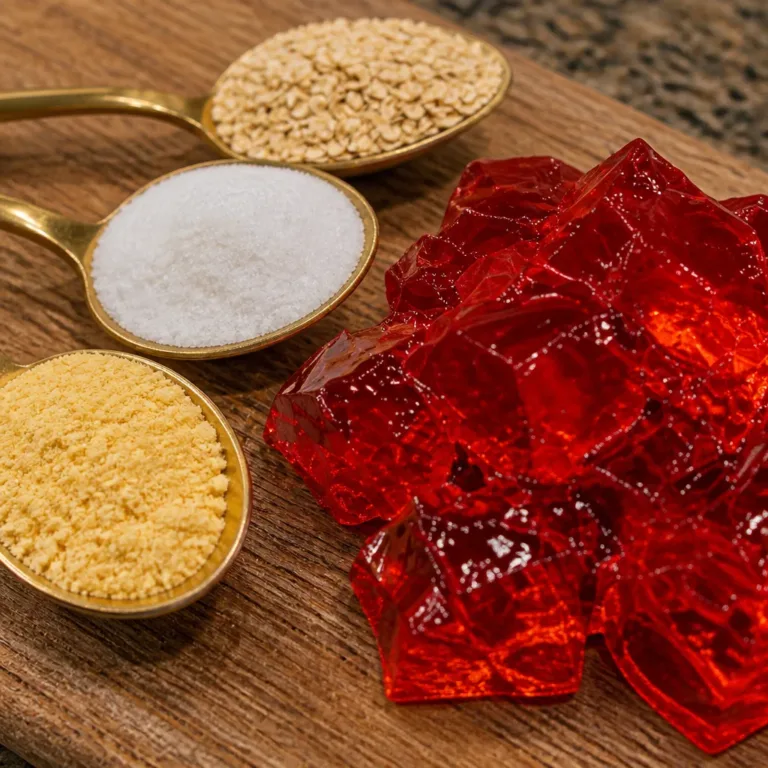
The gelatin trick is not a claim that eating gelatin burns fat. It’s not a metabolism hack. It’s not a replacement for food or exercise. What it is: a simple, high-protein, low-calorie snack made from unflavored gelatin, water, lemon juice, and a small amount of sweetener. Some versions add Greek yogurt or protein powder. The idea is that eating it between meals reduces hunger, cuts down on snacking, and helps you stay in a calorie deficit more comfortably.
That’s it. That’s the whole trick. And once you strip away the social media language around it, it starts to sound a lot less like magic and a lot more like just a smart snack choice.
The recipe that spread most widely combines three ingredients unflavored gelatin powder, lemon juice, and honey or stevia dissolved in water and chilled until set. A single serving comes in around 50 to 70 calories and delivers 6 to 8 grams of protein. For the full base recipe I use, the gelatin trick recipe for weight loss is the version I’d start with.
What Does the Gelatin Trick Actually Claim?
This matters because the claims circulating online vary wildly, and some of them are genuinely misleading. Here’s an honest breakdown of what’s being said and how much of it holds up.
| The Claim | What the Evidence Says | Verdict |
|---|---|---|
| Gelatin reduces hunger | Protein is the most satiating macronutrient. Gelatin is protein. This mechanism is real. | Supported |
| Gelatin boosts metabolism | No meaningful evidence for direct metabolic boost beyond the thermic effect of protein (which applies to all protein foods). | Overstated |
| Gelatin causes fat loss | No food causes direct fat loss. Gelatin supports a calorie deficit by reducing hunger. That deficit is what causes fat loss. | Misleading framing |
| Collagen supports joints and skin | Collagen protein from gelatin does provide amino acids linked to connective tissue. Reasonable supporting evidence exists. | Reasonably supported |
| “I lost X pounds in X days” | Individual anecdotes. Some people changed multiple habits at once and attributed all results to gelatin. Not a controlled comparison. | Unverifiable |
The honest picture: the mechanism behind the gelatin trick is real. The marketing language around it often isn’t. That gap is where most of the “scam” accusations come from and frankly, they’re not entirely wrong.
What the Science Actually Says About Gelatin and Weight Loss
I’m not a scientist. But I can read research without needing someone to dumb it down for me, and I spent some time doing exactly that before I committed to 30 days of eating this stuff.
Here’s what I found that’s actually credible.
Protein is the most satiating macronutrient per calorie. This is one of the most consistently supported findings in nutrition science. A review published through the National Library of Medicine on protein and satiety found that higher protein intake is reliably associated with reduced appetite and lower subsequent calorie consumption. Gelatin is a protein source. That mechanism applies.
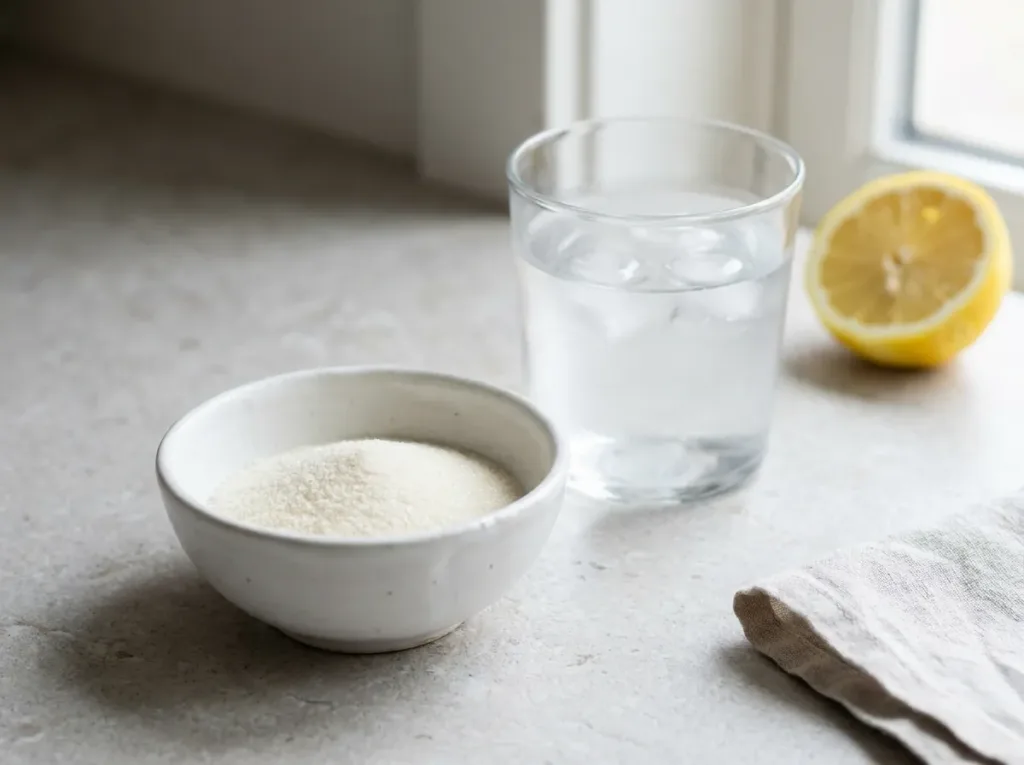
Gelatin protein is not a complete protein it’s missing tryptophan and is low in several essential amino acids. This matters if gelatin is your primary protein source, which it shouldn’t be. As a supplemental between-meal snack alongside a normal diet, the incomplete amino acid profile is a non-issue.
The glycine in gelatin has been studied for its role in sleep quality and metabolic function. The NIH’s research on glycine and metabolic health suggests glycine plays a role in glucose metabolism and may support insulin sensitivity. The amounts in a single serving of gelatin are modest, so “gelatin cures insulin resistance” is a stretch but the mechanism isn’t invented.
The calorie math is straightforward. A serving of gelatin snack runs 50 to 70 calories. If it replaces a 200-calorie afternoon snack four times a week, that’s a 520-calorie weekly deficit from one small habit change. Over a month, that’s a meaningful number without changing anything else.
What the science doesn’t support: the idea that gelatin has any special fat-burning property that other protein foods don’t share. Chicken, eggs, Greek yogurt, and cottage cheese all do the same job through the same mechanism. The gelatin trick’s real advantage is that it’s cheap, fast to make, and has an unusually low calorie count for its protein content.
My Honest 30-Day Test: What Actually Happened
I want to be upfront about what this was and wasn’t. I didn’t do a controlled clinical trial in my kitchen. I ate the gelatin snack once a day, usually mid-morning around 10am, for 30 days. I didn’t change anything else about how I eat or exercise. I tracked my weight every Monday morning, same time, same conditions.
Here’s what I noticed.
Weeks 1 and 2: Honestly, not much. I wasn’t expecting a miracle but I was paying attention. What I did notice was that my 11am hunger the window between breakfast and lunch where I’d usually start thinking about the vending machine was quieter. Not gone, but quieter. I wasn’t reaching for a handful of crackers or a granola bar at 10:45. The gelatin snack was doing the job of holding me over.
Week 3: Down about a pound and a half from my starting weight. I’m aware that’s within normal fluctuation range. But the habit was sticking in a way that most snack swaps don’t. The gelatin was easy to grab from the fridge, took ten seconds to eat, and didn’t leave me feeling like I’d “dieted.” That matters more than people give it credit for.
Week 4: Down about two and a half pounds total from day one. I’d also started making a double batch on Sundays, which meant I had a full week of snacks ready in about 20 minutes. The friction had completely disappeared.
The honest bottom line: I lost two and a half pounds in 30 days by swapping one daily snack. If I’d been stricter about other meals, the number would have been higher. If I’d done nothing else differently and the gelatin snack had been the only change, two and a half pounds over a month is consistent with a modest, sustainable calorie deficit.
Is that dramatic? No. Is it real? Yes. And is it reproducible without willpower, expensive supplements, or complicated tracking? Also yes.

For a broader picture of how other people’s experiences compare, the gelatin trick reviews from real people article covers a range of outcomes worth reading before you set your expectations.
Why Some People See Results and Others See Nothing
This is the part nobody talks about, and I think it’s the most useful thing in this article.
The gelatin trick works through one mechanism: it reduces hunger enough to help you eat less throughout the day. If that mechanism is relevant to your situation, you’ll see results. If it isn’t, you won’t. It’s that simple.
People who tend to see results: people who snack habitually between meals, people who get hungry mid-morning or mid-afternoon and reach for calorie-dense convenience foods, people who respond well to having a “designated snack” that feels satisfying, and people who are already eating reasonably well but struggling with one specific hunger window.
People who tend to see nothing: people who don’t actually snack between meals (the gelatin just adds calories rather than replacing them), people whose overeating happens at dinner or after dinner rather than mid-day, people who eat the gelatin in addition to their normal snacks rather than instead of them, and people who are already in a significant calorie deficit and don’t have much more room to cut.
The number one reason people try the gelatin trick and conclude it’s a scam: they added it to their diet instead of substituting something with it. A 60-calorie gelatin serving that sits alongside your normal afternoon snack isn’t a trick it’s just extra calories.
The number one reason people try it and see results: they replaced something with it. That’s the whole mechanism. There’s nothing more complicated happening.
Is the Gelatin Trick a Scam?

Let me answer this directly because it’s the question bringing most people to this article.
No, it’s not a scam. But some of the marketing around it is.
The recipe itself is a legitimate, evidence-backed approach to managing hunger between meals using a cheap, high-protein, low-calorie food. That’s not a scam. That’s just a smart snack strategy with a catchy name.
What is overstated or misleading: the idea that gelatin has unique fat-burning properties, the before-and-after photos that attribute major weight loss to a single snack change, and the versions of the recipe loaded with extra sweeteners or flavoring that quietly push the calorie count past the point where the math still works.
The recipe is not the problem. The hype is the problem. Strip the hype, make the recipe honestly, eat it as a replacement for a higher-calorie snack, and it does exactly what a good high-protein snack should do.
The gelatin trick for weight loss: what works and what doesn’t goes deeper on exactly where the line is between the legitimate version and the overhyped one.
The Version That Actually Works: What I Use Now
After 30 days of testing I landed on a version that’s slightly different from the basic three-ingredient recipe. Here’s what I make consistently:
- 1 packet unflavored gelatin powder
- 1 1/2 cups water
- 2 tablespoons fresh lemon juice
- 1/2 cup plain non-fat Greek yogurt (adds protein, makes it more filling)
- Liquid stevia to taste
- Pinch of sea salt
The Greek yogurt addition is the variable that made the biggest difference in satiety for me. The basic three-ingredient version kept me full for about 90 minutes. The Greek yogurt version kept me full for closer to two and a half hours. For a mid-morning snack, that’s the difference between making it comfortably to lunch and raiding the pantry at 11:45.
I make six servings on Sunday. They’re in the fridge all week. The whole batch takes 20 minutes. That’s the version I’d recommend if you want to actually test whether this works for you rather than testing whether you can stick to a complicated protocol.

5 Mistakes That Make the Gelatin Trick Not Work
Eating it in addition to your normal snacks. This is the big one. The mechanism only works if the gelatin replaces something higher in calories. If it sits alongside your usual snack, you’ve just added 60 calories to your day.
Using flavored gelatin powder. Flavored gelatin (Jell-O brand and similar) is high in sugar and low in protein. The calorie math stops working, the protein content drops, and the satiety effect weakens. Unflavored only.
Eating it at the wrong time. The gelatin trick is a hunger-management tool. It works best eaten 30 to 45 minutes before a meal or at the point in the day when you typically get hungriest. Eating it right after a full meal doesn’t do much you’re already full.
Expecting rapid results. This is a modest, sustainable calorie deficit tool. The mechanism produces steady, slow results. People who quit after a week because they didn’t drop five pounds in five days were never going to see results from any snack swap the expectation was wrong, not the recipe.
Not giving the gelatin enough time to set. This isn’t a weight loss point but it affects whether you’ll keep making it. A gelatin that’s been in the fridge for only two hours is soft, shaky, and unpleasant to eat. Three hours minimum, overnight preferred. The texture is part of what makes it satisfying.
The Honest Verdict
Does the gelatin trick work for weight loss? Yes, within a specific and honest set of expectations.
It works because protein reduces hunger. It works because 60 calories is less than most snacks. It works because it’s cheap, fast to make, and easy to keep in the fridge for the whole week. It works best when it replaces something, not when it’s added on top of everything else.
It doesn’t work like magic. It doesn’t burn fat. It doesn’t override a diet built on takeout and oversized portions. And the dramatic weight loss stories floating around social media are attached to people who changed multiple things at once and credited the gelatin.
But as one small piece of a sensible eating routine a high-protein, low-calorie swap for an afternoon habit that wasn’t serving you it’s one of the most practical things I’ve added to this kitchen. Katie asked me if it was real. My honest answer: yeah, it’s real. It’s just not magic. Go make it yourself and see.
FAQs: Does the Gelatin Trick Work for Weight Loss?
Does the gelatin trick actually work for weight loss?
Yes, within realistic expectations. The gelatin trick works by providing a high-protein, low-calorie snack that reduces hunger between meals. When it replaces a higher-calorie snack, it creates a modest daily calorie deficit. Over weeks and months, that deficit produces real weight loss. It does not burn fat directly or boost metabolism in any special way.
Is the gelatin trick a scam?
The recipe itself is not a scam — it is a legitimate high-protein snack with a sound mechanism for supporting a calorie deficit. Some of the marketing around it overstates the results. Claims of dramatic rapid weight loss or special fat-burning properties are not supported by evidence. The recipe works as a hunger management tool, not as a fat-loss accelerator.
How long does it take to see results from the gelatin trick?
Results depend on whether the gelatin replaces higher-calorie snacks and how consistently it is used. Most people who use it as a daily snack replacement report noticeable hunger reduction within the first week. Measurable weight changes typically appear after two to four weeks of consistent use alongside an otherwise reasonable diet. It is a slow, steady tool, not a rapid solution.
Why does the gelatin trick work for some people and not others?
The gelatin trick works through hunger reduction. People who snack habitually between meals and replace those snacks with gelatin tend to see results. People who eat gelatin in addition to their normal snacks, or whose calorie surplus happens at dinner rather than mid-day, typically see little or no benefit. The mechanism is sound, but it only applies if the snack is genuinely replacing calories, not adding them.
What ingredients are in the gelatin trick recipe?
The basic version uses unflavored gelatin powder, water, lemon juice, and a small amount of honey or stevia. A more filling version adds plain Greek yogurt, which raises the protein content from roughly 6 to 8 grams per serving up to 12 to 14 grams and significantly extends satiety. Always use unflavored gelatin, not sweetened flavored gelatin like Jell-O, which is high in sugar and low in protein.
How much weight can you lose with the gelatin trick?
Weight loss depends on the individual’s starting point, overall diet, and whether the gelatin genuinely replaces higher-calorie snacks. Replacing one 200-calorie daily snack with a 60-calorie gelatin serving creates a deficit of roughly 980 calories per week. Over a month, that is approximately one pound of fat loss from that single change alone, with no other modifications required.
Is the gelatin trick better than other high-protein snacks?
The gelatin trick is not nutritionally superior to Greek yogurt, cottage cheese, or hard-boiled eggs as protein snacks. Its real advantages are cost and convenience. A full week of gelatin snack servings costs under two dollars in ingredients and takes 20 minutes to prep on Sunday. For people who won’t consistently prepare other high-protein snacks, the gelatin trick wins on practical sustainability.

What’s Cooking in Your Kitchen?
Tried this recipe your own way? I want to see it. Snap a quick pic and tag us, or drop a comment with what you tweaked. Lazy cooking works best when we swap ideas and your spin might be the next Lazy Meal Prep favorite.
Post your photo and tag @lazy_mealprep I’ll share my favorites in stories.