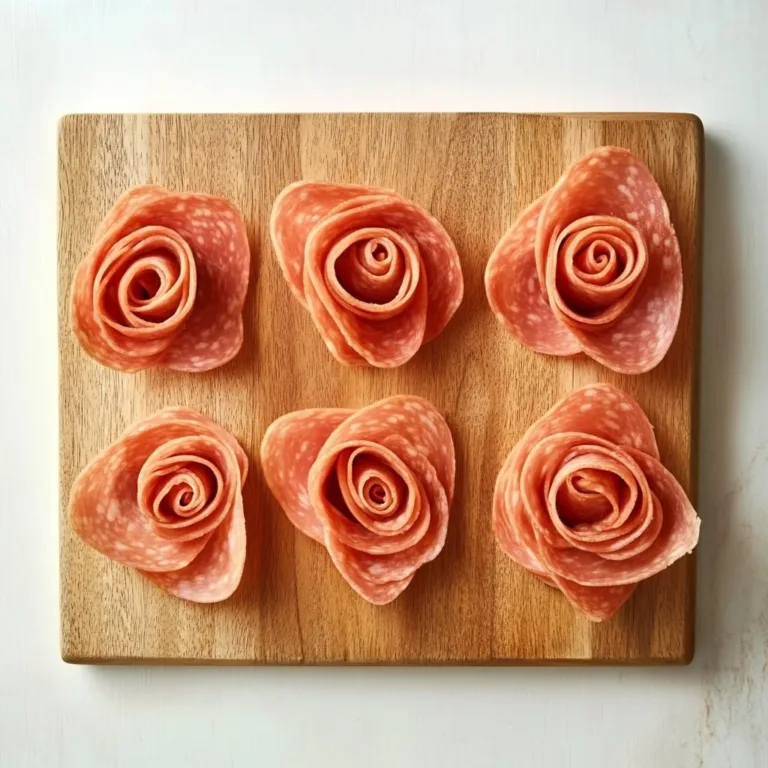
The warm, savory perfume of cured meat and fresh herbs fills my kitchen as I fold the last petal into a tiny rose. The counter is a scatter of crackers, soft cheeses, and a single shot glass turned upside down like a tiny mold. These charcuterie roses are small, elegant, and comforting, perfect for a slow afternoon with coffee or a quiet night in with a friend and a good conversation. If you enjoy small, thoughtful snacks, you might also love my take on a perfect quesadilla recipe for casual gatherings.
Why You’ll Love This How to Make Charcuterie Roses
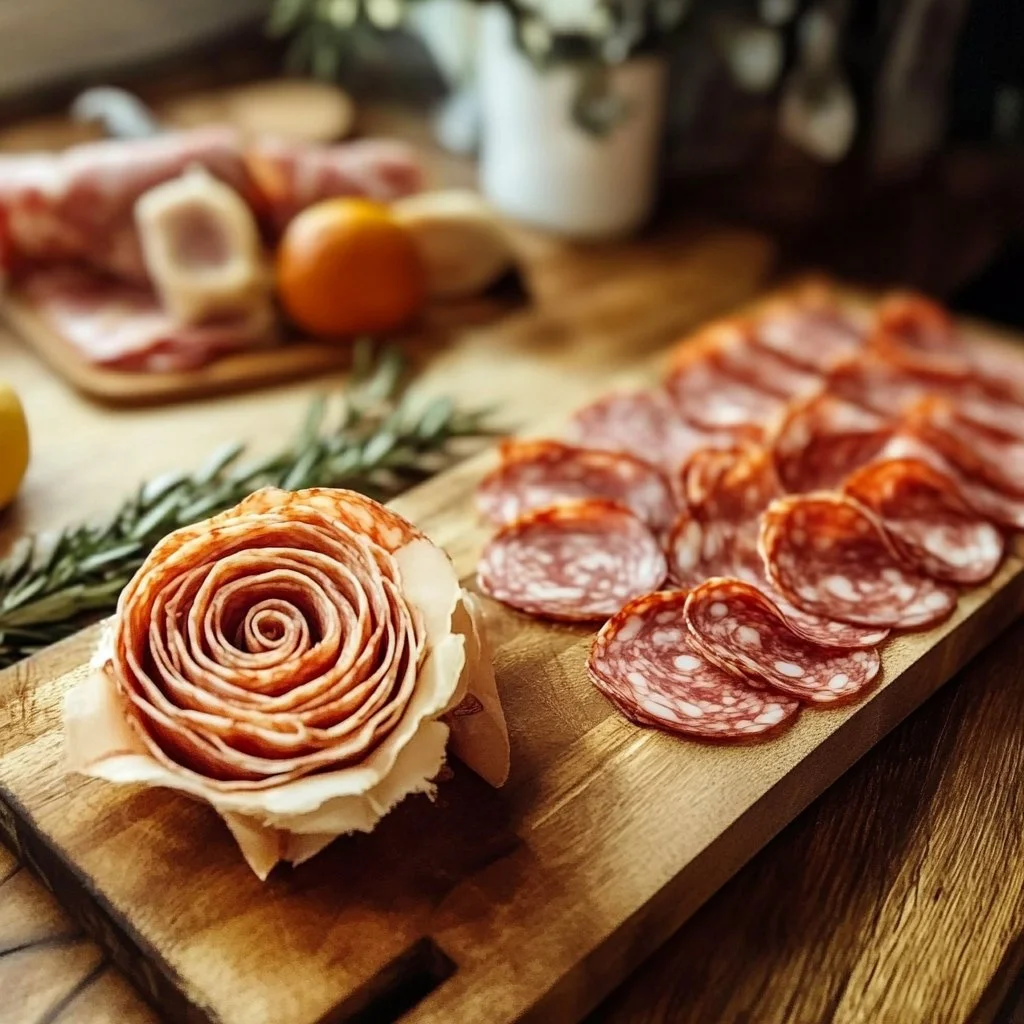
There is something quietly celebratory about a tiny, edible rose. It asks for no special occasion and fits every one of them. These charcuterie roses are simple to make, beautiful to arrange, and they taste like a small, everyday luxury.
They are the kind of snack that turns a regular coffee break into a bit of ceremony. The folded salami curves into soft, meaty petals. Cream cheese or a smear of herbed goat cheese gives a cool contrast. The salty, slightly sweet edges of the meat curl and catch the light like golden petals. From my kitchen to yours, these are the little bites I bring to birthdays, to long chats over tea, or to evenings when I want something pretty and satisfying.
These roses are forgiving. You do not need perfect cuts or special tools. The shapes are loose and wearable. If you want a fuller rose, add more layers. If you like a tighter bloom, use smaller slices and fold them more closely. They make any board look intentional, and they make your guests feel seen.
Bringing How to Make Charcuterie Roses Together
“When the kitchen smells like savory perfection, you know something special is coming.”
Before we list ingredients, here is a short overview. You will assemble slices of salami into petals around a small glass, add a creamy center, and transfer the finished roses to a board. Look for glossy edges, slight curl in the meat, and a tidy base that sits flat. The aroma is savory and slightly sweet. The texture should be tender with a little chew and a pleasing pop of fat.
These roses can be made in ten to twenty minutes once your ingredients are ready. They are ideal for last-minute guests, afternoon tea, or a small celebration. If you want a visual inspiration, try pairing them with crunchy crackers and a handful of marinated olives.
Ingredients You’ll Need
- 12 pieces of salami
- A shot glass
- 4 ounces soft cream cheese, room temperature
- 2 tablespoons plain Greek yogurt or a splash of heavy cream
- 1 tablespoon finely chopped fresh chives
- 1 teaspoon lemon zest
- 12 small crackers or crostini
- 1/4 cup mixed olives, pitted and halved
- 1/4 cup thinly sliced cornichons or gherkins
- Fresh herbs for garnish – thyme or microgreens
- A drizzle of honey or fig jam for contrast (optional)
Use real butter if you can when you assemble any buttered crackers or crostini nearby – the small choice makes every bite feel worth it. The salami should be thin but sturdy enough to fold without tearing. If you prefer, swap salami for prosciutto, soppressata, or a vegetarian deli slice. The key is thinness and flavor.
How to Make How to Make Charcuterie Roses
Step-by-Step Overview
These roses are assembly, not baking. You will fold, layer, and press gently to shape each bloom. Keep the salami slightly chilled so it holds its shape while you work. Once a rose is finished, chill briefly to set the shape if your kitchen is warm.
As you work, watch for these cues: petals that catch light at the edges, a creamy center that stays fluffy and not runny, and a base that sits flat on the board. If your cheese seems too soft, chill it for five minutes and reshape.
Directions
- Place the shot glass (or champagne flute) down onto the counter. Keep the glass steady with one hand. You will build the petals around its rim.
- Begin folding the salami in half over the edge of the shot or champagne glass. Fold from the outer edge inward to create a petal shape. Hold the fold gently so it keeps its curve.
- After the first layer, continue adding additional pieces of salami to make additional layers. Overlap each slice by about one third so the petals read as one flower. Rotate the glass slightly as you add more slices for an even bloom.
- After the second row of meat, add a third. Use smaller pieces toward the center to create a tight bud. Adjust petals so they curve naturally around the glass.
- Repeat for about 3-4 layers, and turn the glass upside down to remove the roses. Tap the glass gently to release the rose. If it resists, nudge a petal and try again.
- If you need additional layers of meat, feel free to place the rose back onto the glass and add more. Add only as many as you like for size and fullness. Press lightly at the base to keep everything together.
- Spoon or pipe a small dollop of cream cheese mixed with yogurt, chives, and lemon zest into the center. Keep the filling cool and slightly firm so petals do not slump. The center should be creamy but hold its shape.
- Gently lift the finished rose and place it on a cracker or as a loose bloom on the board. Arrange petals so the rose looks natural and open. Add another drizzle of honey or a tiny spoon of jam if you like sweet contrast.
- Chill for 5 to 10 minutes if your kitchen is warm. This helps the cheese set and the petals stay in place. Serve soon after chilling for the best texture.
Texture tips: the salami should have tender, flexible edges with a slight chew. The cream cheese center should be cool and slightly firm so each bite brings a cream-to-meat contrast. Timing tip: assemble roses within an hour of serving for best flavor and appearance.
Ingredients Notes and Practical Tips
Choose thinly sliced salami from a deli counter for the best texture. Pre-packaged slices are fine, but freshly sliced salami has a softer mouthfeel. The cream cheese mix in the center can be flavored simply with salt, lemon, and chives, or made richer with a splash of heavy cream.
If you want a stronger herb flavor, stir in a small pinch of dried oregano or a drop of honey to balance the salt. For a lighter option, use a mild ricotta blended with lemon zest and a touch of salt.
If you are making a larger platter, keep a handful of extras in a covered container in the fridge and assemble roses near serving time. This keeps everything neat and reduces weeping from the cheese.
Serving How to Make Charcuterie Roses With Love
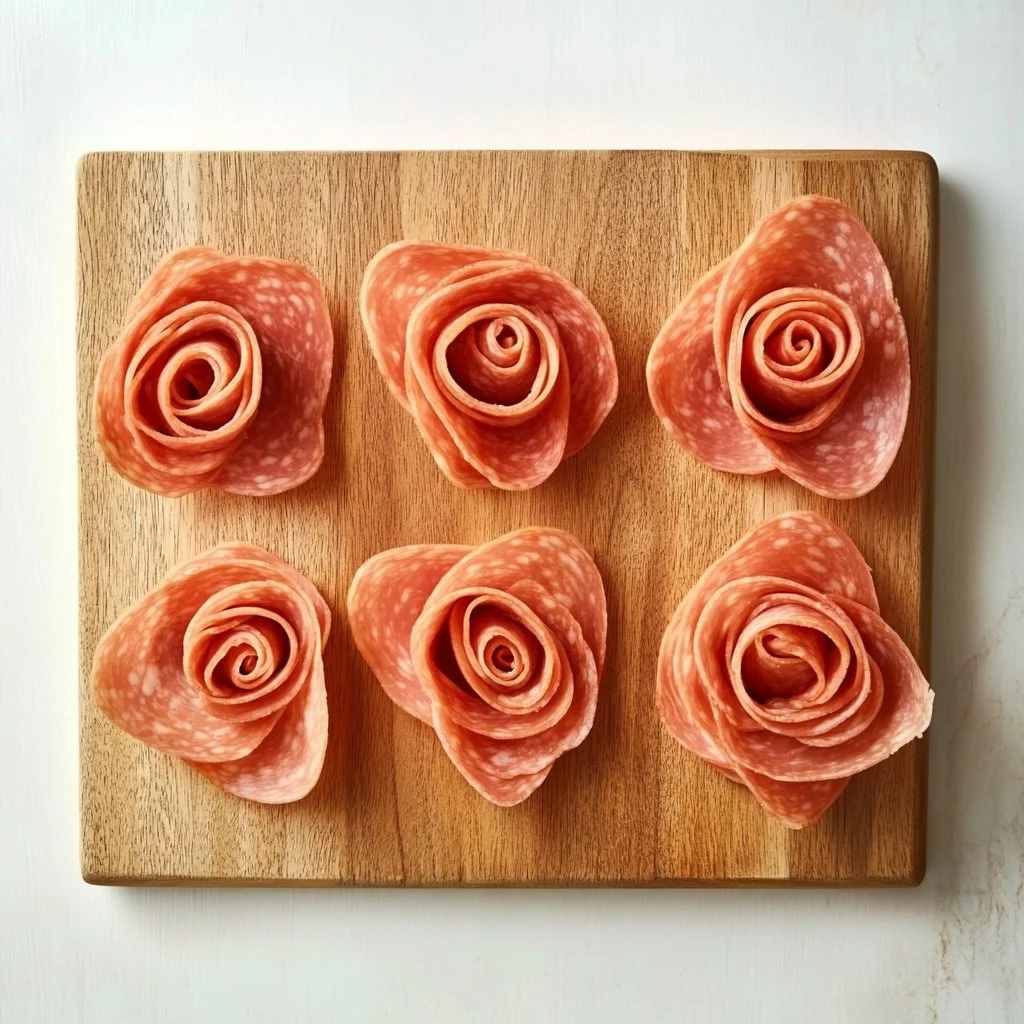
These roses are made to share. Place them on a board with crackers, a bowl of olives, and a small pile of sliced fruit. A few golden slices of apple or pear add freshness and a sweet counterpoint to the salt of the meat.
Serve with a hot cup of coffee for a quiet morning treat, or invite friends over for an evening with wine. A soft, mild cheese like burrata or a slice of aged cheddar pairs well with the savory petals.
A small presentation touch: scatter fresh herbs around the board and add a tiny spoon of fig jam for guests to pair with each rose. If you want to make a more substantial plate, add warm, crunchy bites like the crispy breaded chicken for hearty appetites. Keep each rose on a cracker for easy picking, or let guests create their own combinations.
Keeping How to Make Charcuterie Roses Fresh
Short answer: keep them cool and eat within a day for the best experience. These roses are best the day they are made, but with careful storage they will hold for up to 24 hours.
In the fridge: place roses in a single layer in an airtight container with a folded paper towel at the bottom to absorb moisture. Cover loosely with plastic wrap so the petals do not get flattened. They stay best at 36 to 40 F and will keep their shape for a day.
Freezer: I do not recommend freezing made roses. The texture of the meat and the creamy center will change. If you want to prepare in advance, store the filling and the slices separately. Keep the filling in a small covered bowl and the slices wrapped in wax paper in a sealed bag. Assemble shortly before serving.
Bring to room temperature: take roses from the fridge about 10 minutes before serving. This takes the chill off the cheese and allows the flavors to bloom. Do not leave them out more than two hours if you are serving at room temperature.
If a rose becomes slightly damp from being stored, place it on a paper towel for five minutes to wick away excess moisture before serving.
Susan’s Baking Notes and Lessons From My Kitchen
- Work chilled: Keep the salami in the fridge until you are ready to fold. Cold slices hold their shape better and feel less slippery.
- Use a gentle touch: Press petals at the base, not at the top, so the bloom looks natural and airy.
- Make a small test rose: Start with three to four slices to find your favorite size. It helps you balance filling and petals.
- Clean as you go: Keep a small towel nearby to wipe any stray cream cheese. It keeps the board tidy and makes for prettier photographs.
- Layer for fullness: If you like a lush bloom, add smaller slices toward the center. This gives a natural gradation and a denser look.
These small practices come from many evenings spent arranging snacks for friends and family. Over time, I learned that small changes – a colder slice, a tighter fold, a softer cheese – shape how these little roses look and feel.
Flavor Twists & Variations
- Sweet-salty: Swap the cream cheese for mascarpone and add a dot of fig jam in the center. The contrast is luxurious and perfect for a celebratory board.
- Spicy bloom: Mix a pinch of red pepper flakes into the cheese or use peppered salami. The warmth pairs beautifully with cooling yogurt or sour cream.
- Vegetarian option: Use thinly sliced roasted beet or a firm tomato slice as petals around a basil and ricotta center. The color is stunning and the flavor is fresh.
- Mini roses: For tea parties or smaller bites, use half slices of salami and a smaller glass or even a bottle top to shape tiny blooms.
- Cheese swap: Try goat cheese for tang, or a mild blue cheese for a bolder bite. Balance stronger cheeses with a touch of honey to temper the salt.
- Herb finishes: Finish with microgreens, fennel fronds, or a little lemon zest for brightness. A tiny pinch of flaky sea salt at the end makes the flavors pop.
Each variant keeps the same simple technique but shifts the mood. These roses can be rustic and savory or sweet and refined. They adapt to seasons, moods, and guests.
Practical Pairings and Plating Ideas
Pair these roses with a simple board. Add a handful of nuts for crunch, slices of crusty bread or buttered crostini, and a small bowl of pickles. For a dessert-like finish, include a platter of fresh berries or a light fruit salad.
Presentation tip: use one large board or several small plates for an intimate feel. Space the roses so each bloom has room to show its petals. Sprinkle edible flowers or fresh herbs to make the board look collected, not crowded.
For casual dinners, let guests assemble their own crackers. Provide toothpicks and small spoons for jam or honey. For a tea setting, place three mini roses on each plate with a small spoon of jam on the side.
FAQs About How to Make Charcuterie Roses
Can I make this ahead of time?
Yes, you can prepare the components ahead. Keep the salami wrapped in wax paper in the fridge and the filling in a covered bowl. Assemble the roses within two hours of serving for the freshest look and best texture.
What kind of cheese works best?
Soft cheeses like cream cheese, mascarpone, or whipped ricotta work beautifully as centers. They offer a creamy contrast to the meat and hold shape when chilled briefly.
How long will leftovers last?
Leftover assembled roses are best within 24 hours. Store in a single layer in an airtight container with a paper towel to absorb excess moisture.
Can I use different meats?
Absolutely. Prosciutto, soppressata, and peppered salami all make lovely roses. Each will have a slightly different texture, so adjust your folding gently.
Any tips for transport?
If you need to bring roses to a gathering, assemble them shortly before leaving. If that is not possible, store components separately and finish assembly on arrival. Use a shallow box and do not stack roses.
A Few Troubleshooting Notes
If petals slip or the rose falls apart, add one small dab of filling to the base to glue the layers together. If the filling is too runny, chill it for five minutes and stir again. If the salami tears, trim the edge and fold with a fresh slice.
If the roses look flat, add a tiny inner layer of smaller slices to create a bud. If they are too tight, gently open the petals with your fingers or a small knife.
Remember that part of the charm is a slightly imperfect petal. These are handmade and meant to feel intimate, not museum perfect.
Final Serving Touches
Before guests arrive, give each rose a small garnish – a tiny herb leaf, a sprinkle of lemon zest, or a delicate crack of fresh pepper. Serve with small forks, cocktail picks, and a linen napkin. Place a few bowls of pickles and olives nearby for palate contrast.
If you have children helping, let them choose a petal or two for arrangement. It is a simple way to make a meal feel like an event, even on an ordinary day.
A Warm Goodbye From My Kitchen
I hope these charcuterie roses bring a little slow beauty to your table. They are a small thing that says I made something for you, and that feeling matters. Whether for a morning coffee, a cozy chat, or a birthday, these bites are easy, pretty, and comforting. Keep the technique simple, choose good ingredients, and let small choices like fresh herbs and chilled cheese make the difference.
Conclusion
If you would like another visual guide to shaping salami petals, this step-by-step tutorial is a helpful reference How to Make A Salami Rose For a Charcuterie Board | Hilda’s Kitchen. For a second approach with a few different techniques, I recommend this clear and friendly guide How to Make a Salami Rose (2 ways!) | The Recipe Critic.
Charcuterie Roses
Ingredients
Main Ingredients
- 12 pieces salami Thinly sliced
- 4 ounces soft cream cheese Room temperature
- 2 tablespoons plain Greek yogurt Alternatively, use a splash of heavy cream
- 1 tablespoon finely chopped fresh chives
- 1 teaspoon lemon zest
- 12 pieces small crackers or crostini
- 1/4 cup mixed olives Pitted and halved
- 1/4 cup thinly sliced cornichons or gherkins
- Fresh herbs for garnish – thyme or microgreens
- to taste honey or fig jam Optional drizzle for contrast
Instructions
Assembly
- Place the shot glass (or champagne flute) down onto the counter and keep it steady with one hand.
- Begin folding the salami in half over the edge of the glass to create a petal shape.
- Continue adding additional pieces of salami to make more layers, overlapping each slice by about one third.
- Adjust petals to curve naturally around the glass, using smaller slices for a tighter bud.
- Once satisfied, turn the glass upside down to remove the roses and tap gently to release.
- Spoon or pipe a small dollop of the cream cheese mixture into the center of each rose.
- Place the finished rose on a cracker or arrange it loosely on the board.
- Chill for 5 to 10 minutes before serving for the best texture.